godot shaders
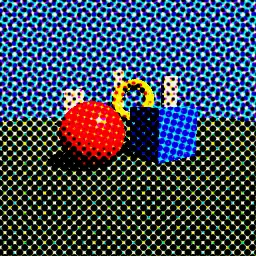
CMYK halftone print screens
Reproduce colour printing: the image is split into cyan, magenta, yellow and black, each printed as dots on its own rotated grid with dot size following the ink amount, then composited on paper.
 AgentFoundrySign in ↗
Component examples
Browse actual creative components, their file lists and the checks recorded for each version. Download through your connected agent with the required account access.
376 public examples
godot shaders
Reproduce colour printing: the image is split into cyan, magenta, yellow and black, each printed as dots on its own rotated grid with dot size following the ink amount, then composited on paper.
godot shaders
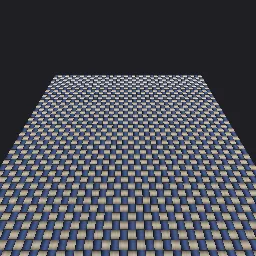
Woven cloth from UVs: warp and weft threads crossing over and under in a plain or twill pattern, each thread shaded as a rounded strand through the normal map, with Godot's rim term for the soft cloth sheen.
godot shaders
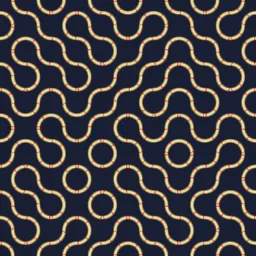
Endless maze-like curves from Truchet tiles: each cell holds two quarter-circle arcs in one of two orientations chosen by a hash, so arcs join into continuous paths, with light running along them.
godot shaders
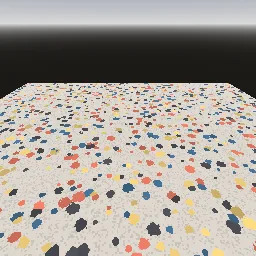
Terrazzo surface: irregular stone chips of several colours and sizes set in a speckled cement matrix, from jittered Voronoi cells with noisy edges, with a polished finish.
godot shaders
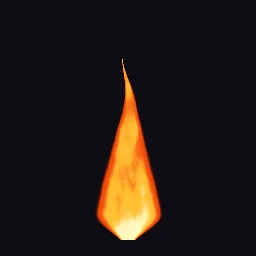
Draw a flickering flame in a rectangle: distorted fractal noise rising over time, shaped by a tapering mask, coloured through a four-step heat ramp with transparency outside the flame.
godot shaders
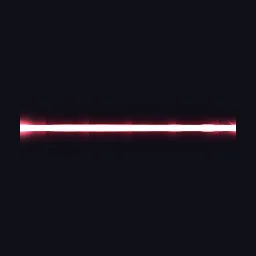
Draw a horizontal laser across a rectangle: a hot core and coloured glow with noisy width, pulses travelling along it, a flare at the emitter end and sparkling impact at the far end.
godot shaders
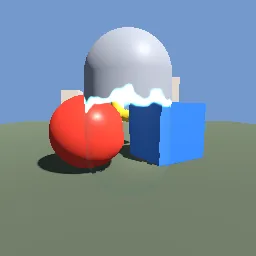
Turn a mesh invisible like active camouflage: the cloaked part shows the refracted, shimmering scene behind it, a noisy sweep along the object's height switches between cloaked and visible, and a glowing seam marks the transition.
godot shaders
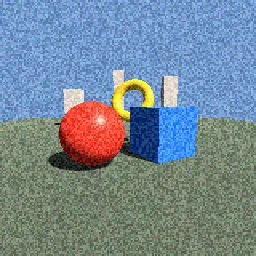
Add moving film grain whose strength follows image brightness (strongest in midtones), with adjustable grain size, colour or monochrome grain, and a gentle exposure flicker.
godot shaders
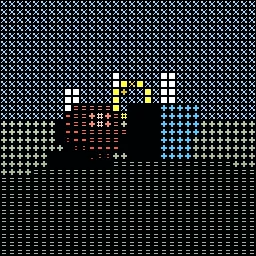
Render the scene as text: the screen is cut into character cells, each cell's brightness picks one of ten 5 x 5 bitmap glyphs from sparse to dense, drawn in the cell colour or a single terminal colour.
godot shaders
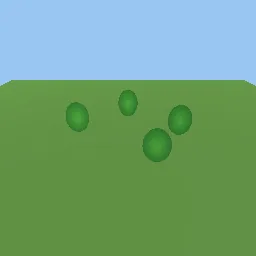
Vertex billboarding for cards with two modes: spherical (faces the camera fully, for glows and particles) or cylindrical (turns only around the world Y axis, for trees and characters that must stay upright), keeping node position and scale.
godot shaders
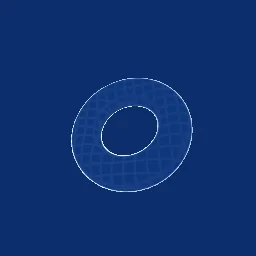
Show a mesh as a see-through blueprint drawing: solid white contour lines on front faces, dashed lines for contours on hidden back faces, a faint object-space graph paper grid and a translucent blue fill.
godot shaders
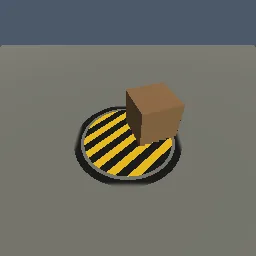
Project a decal onto whatever geometry lies inside a box: the box's pixels rebuild the scene position from depth, move it into the box's local space, discard outside the box, fade on steep surfaces, and draw a procedural emblem or an assigned image.
godot shaders
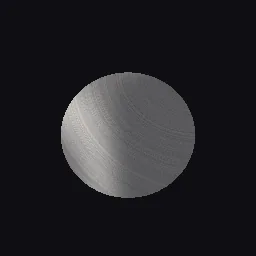
Brushed metal with a custom light function: a Ward anisotropic specular stretched along a brushing direction (linear along the tangent or circular around a UV centre) plus fine procedural brush streaks.
godot shaders
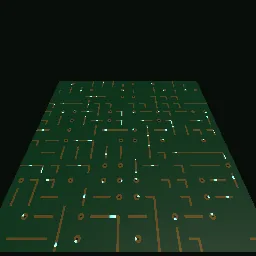
Printed circuit board surface: a cell grid of random copper traces (straight runs, corners and via pads) on solder mask, with emissive signal pulses running along the traces.
godot shaders
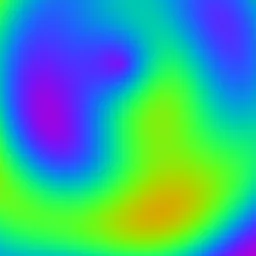
Animated plasma: four sine fields (horizontal, vertical, diagonal and radial) summed and mapped through a cosine colour palette that cycles over time.
godot shaders
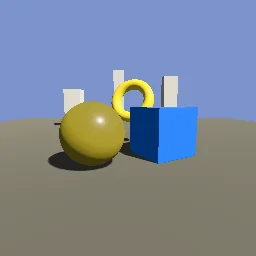
Simulate protanopia, deuteranopia, tritanopia or achromatopsia on the whole screen with a severity mix, to check that a game's colours stay distinguishable for colour-blind players.
godot shaders
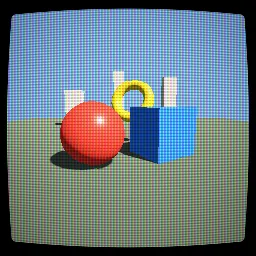
Make the screen look like a curved cathode ray tube: barrel-curved image with rounded black corners, horizontal scanlines, an RGB aperture mask, glow from blurred mip levels and a vignette.
godot shaders
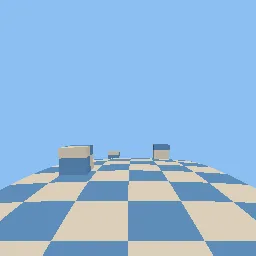
Bend everything that uses the material downward with the square of its horizontal distance from the camera, so the world curves away like a small planet or a rolling log, with a checker pattern to show the bend.
godot shaders
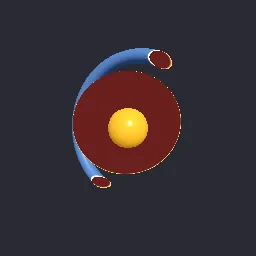
Slice meshes open along a world-space plane: everything on one side is discarded, the exposed inside shows as a flat cap colour, and a glowing band marks the cut, for cross sections and reveal effects.
godot shaders
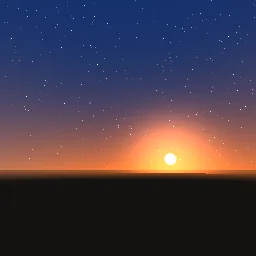
Sky shader whose colours follow the first directional light: day, sunset and night gradients blend by the sun's elevation, a sunset band leans toward the sun, a sun disc and halo track the light, and stars fade in after dusk.
godot shaders
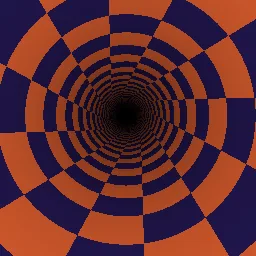
Fly down an endless tunnel: screen positions become an angle and an inverse distance, which index a procedural checker or stripe wall pattern that scrolls toward the viewer and darkens with depth.
godot shaders
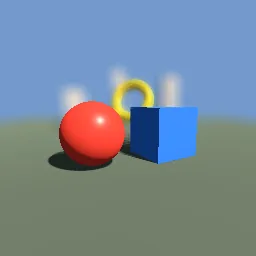
Blur the scene by distance from a focus plane: a circle of confusion per pixel from the depth buffer and a gather of samples on a golden-angle spiral, weighted so sharp foreground edges do not smear.
godot shaders
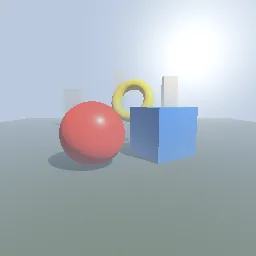
Full-screen fog computed from reconstructed world positions: exponential distance fog, exponential height fog that pools low, a near to far colour gradient and a brighter glow toward a sun direction.
godot shaders
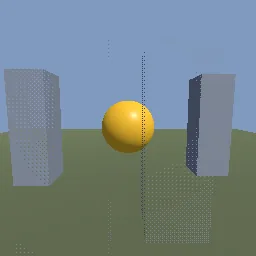
Fade an opaque mesh without transparency sorting: pixels are discarded against a 4 x 4 Bayer threshold pattern as the object comes close to the camera or as a fade uniform drops, so walls and props in front of the camera become see-through.
godot shaders
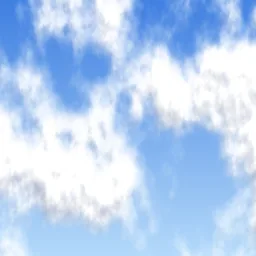
Draw a sky with drifting clouds from fractional Brownian motion: a coverage threshold shapes the clouds, a second lookup toward the sun shades their undersides, and the sky behind follows a vertical gradient.
godot shaders
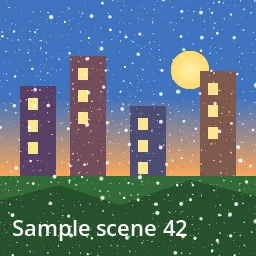
Overlay falling snow: flakes in three depth layers fall at different speeds, sway sideways on sine paths, vary in size and soften with distance, drawn on a transparent rectangle over the scene.
godot shaders
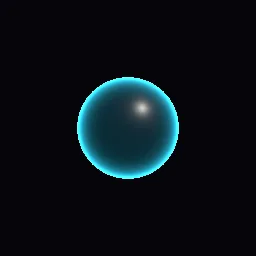
Make the silhouette of a mesh glow with an emissive rim whose width follows a Fresnel power curve, independent of scene lights, with an optional slow pulse. Use for pickups, energy objects and highlighted interactables.
godot shaders
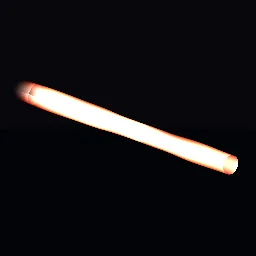
Additive energy beam on an open cylinder: a bright core from the facing ratio, noise and pulses scrolling along the length, tapered ends and a slight radial jitter in the vertex stage.
godot shaders
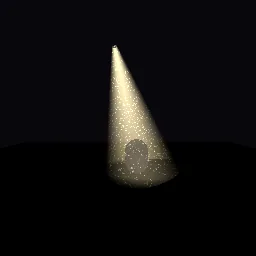
Additive spotlight beam on an open cone mesh: soft edges from the facing ratio, brightness falling off along the beam, drifting dust specks, and a soft fade where the cone meets geometry using the depth buffer.
godot shaders
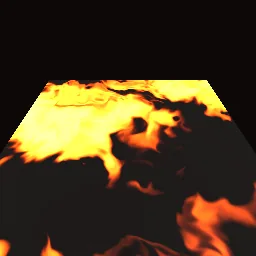
Procedural lava with a dark cooled crust floating on glowing molten rock, built from twice domain-warped fractal noise that slowly flows, with emission only on the hot parts.
godot shaders
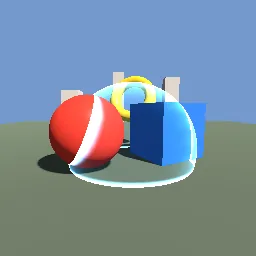
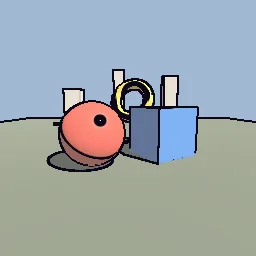
Additive energy shield that brightens at its silhouette, carries moving bands, and glows where it cuts through other geometry, found by comparing its depth with the scene depth buffer.
godot shaders
Draw ink lines over a 3D scene where depth or colour changes sharply: a Laplacian of inverse depth finds silhouettes and creases, a Sobel filter on luminance finds colour borders. Optional paper tint for a drawn look.
godot shaders
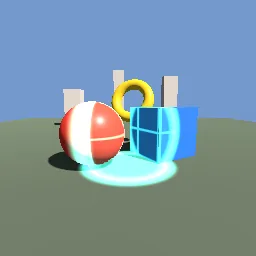
Full-screen scanner effect: world positions are rebuilt from the depth buffer and bright rings expand from a world point across every surface, with a fading trail, a world grid inside the trail and edge highlights.
godot shaders
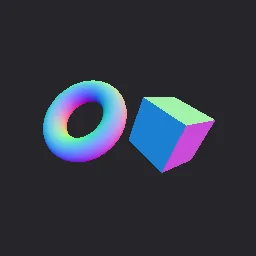
One unshaded debug material with a mode switch: world normals, view normals, tangents, binormals, UVs, vertex colours, linear depth bands or world position cells, for checking imported meshes and shader inputs.
godot shaders
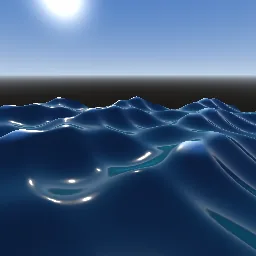
Displace a subdivided plane with three summed Gerstner waves computed in world space, with analytic normals, sharp crests, crest foam colour and a view-dependent deep to shallow tint.
godot shaders
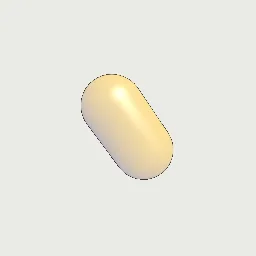
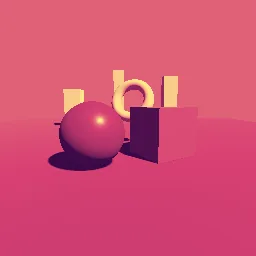
Shade a mesh from a cool tone facing away from the light to a warm tone facing it, with a white Blinn highlight and darkened silhouettes, for technical illustration that keeps shape readable in shadow.
godot shaders
Recolour the scene by mapping its luminance through a gradient texture (duotone, tritone or any ramp), with contrast and offset controls and a mix with the original colours.
godot shaders
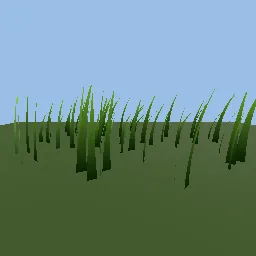
Vertex wind for grass and plant cards: blades bend more toward the tip, gusts travel across the field as moving noise in world space, each blade gets its own phase, and the blade is cut to a tapered shape with a root to tip gradient.
godot shaders
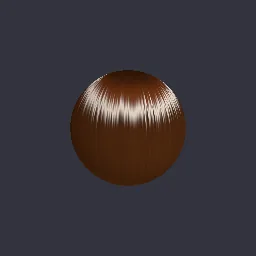
Hair shading for meshes and cards with strands along UV v: two Kajiya-Kay specular lobes shifted along the strand, a white primary and a tinted secondary, broken up per strand by noise, over a root to tip colour.
godot shaders
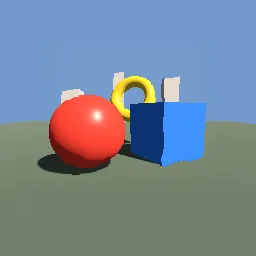
Place a card over a hot area to shimmer the scene behind it: scrolling noise offsets the screen texture, rising faster toward the top, faded at the card edges and by distance.
godot shaders
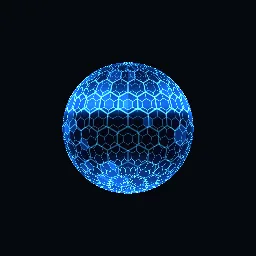
Energy shield made of hexagonal cells: glowing cell borders, cells that light up as a pulse wave climbs the object, random flickering cells and a Fresnel rim, drawn additively.
godot shaders
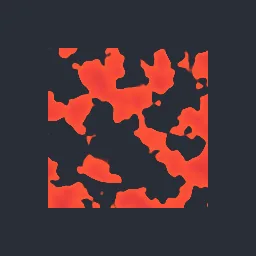
Flash a sprite toward a colour when it takes damage: mix, additive or full silhouette modes, an amount to animate from a script, and an optional automatic blink for invulnerability frames.
godot shaders
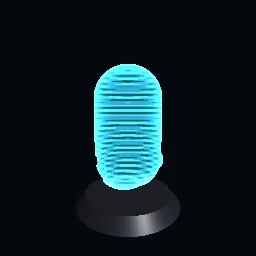
Render a mesh as an additive hologram: world-space scanlines that scroll, a Fresnel edge, random flicker and horizontal slices that jump sideways for a moment, all from TIME and hashes.
godot shaders
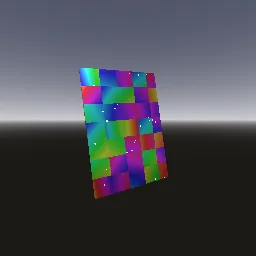
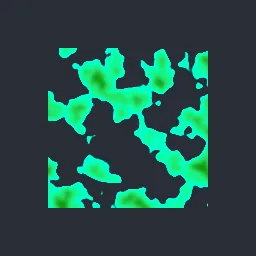
Stylized holographic foil for cards and stickers: rainbow bands that slide with the viewing angle, a grid of diffraction tiles each with its own grating direction, and sparkle points, over a printed base colour.
godot shaders
Adjust a sprite's colours in HSV space (hue rotation, saturation, value), then optionally fade it toward greyscale or sepia, with contrast control, for variants, status effects and old-photo looks.
godot shaders
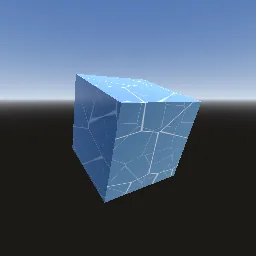
Ice material with white Voronoi crack lines on the surface and a second crack layer that appears below the surface through tangent-space parallax, plus a cold frost rim and glossy highlights.
godot shaders
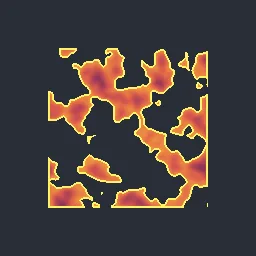
Draw a border of a chosen width inside the opaque shape of a sprite, following its silhouette, with optional pulsing and an option to hide the interior so only the inner line remains.
godot shaders
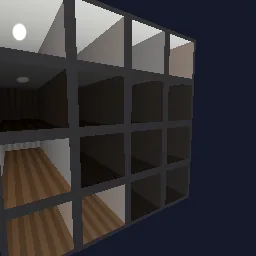
Fill a flat building facade with rooms that have depth: each window cell ray-casts into a virtual box room and shades its back wall, side walls, floor and ceiling procedurally, with per-room colours and lights.
godot shaders
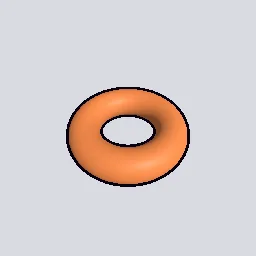
Draw a solid ink outline around a mesh by rendering its back faces pushed out along the normals, as a next pass on any existing material, with optional distance scaling so the line keeps a similar width on screen.
godot shaders
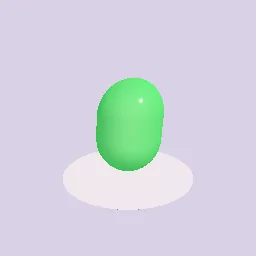
Make a mesh wobble like jelly: a damped sway that grows with height, a periodic bounce with volume preserving squash and stretch, and a glossy translucent body with a soft inner glow.
godot shaders
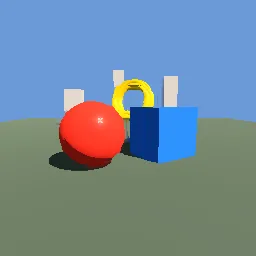
Turn the rendered scene into a painting: for each pixel, four overlapping square regions are compared and the mean colour of the region with the least variance wins, which flattens areas into strokes while keeping edges.
godot shaders
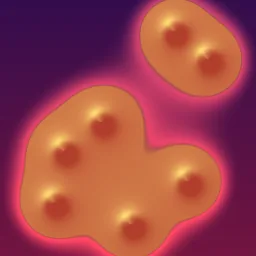
Soft blobs that merge and split like a lava lamp: several metaballs follow Lissajous paths, their summed inverse-square field is thresholded into shapes, shaded by the field gradient and given a glowing rim.
godot shaders
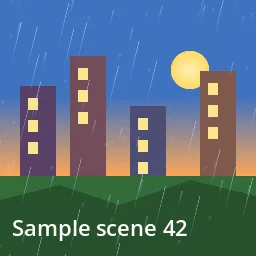
Overlay falling rain on any 2D scene: three layers of slanted streaks at different speeds, lengths and opacities for depth, drawn as a transparent rectangle over the content.
godot shaders
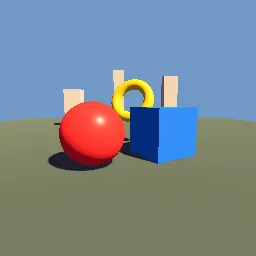
Grade the final image like a colour corrector: lift for shadows, gamma for midtones, gain for highlights as colours, plus contrast, saturation, vibrance, white balance temperature and tint.
godot shaders
Map the light term through a gradient texture so an artist controls the whole shading curve and its colours: warm lights, coloured shadows, sharp or soft transitions, plus a ramp-driven specular and rim.
godot shaders
Soft smoke puff on a camera-facing quad that the scene lights shade like a sphere: a fake spherical normal plus noise detail, churning fractal noise for the shape, and soft alpha falloff.
godot shaders
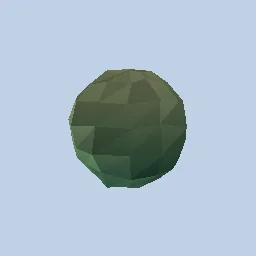
Give any mesh a faceted low-poly look: per-pixel face normals from screen derivatives, per-facet colour variation from a hash of the face normal, a height gradient, and optional vertex jitter to break up regular primitives.
godot shaders
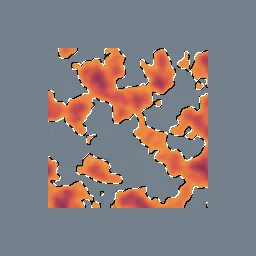
Mark a selected sprite with the classic animated dashed outline: alternating dark and light dashes move along the edge of the sprite's alpha shape, drawn inside or outside the edge.
godot shaders
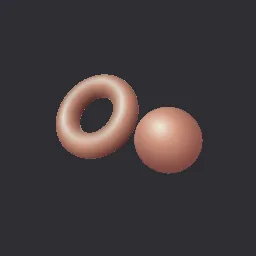
Light a mesh entirely from a matcap: the view-space normal looks up a lit-sphere texture, so shading is baked and costs one sample. Ships with a procedural gradient matcap and accepts any matcap image.
godot shaders
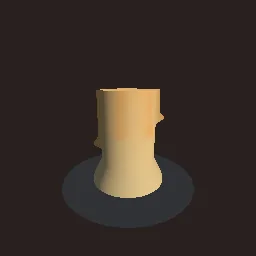
Melt a mesh from the top down: vertices sag below a rising melt amount, drips hang at hashed points around the outline, the base spreads into a puddle, and the surface becomes glossier as it melts.
godot shaders
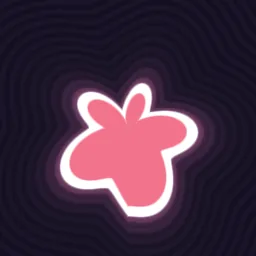
Draw resolution-independent shapes from 2D signed distance functions (circle, rounded box, star, heart) and morph between them over time, with fill, outline, glow and optional distance contour lines.
godot shaders
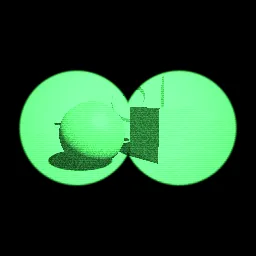
Green phosphor night vision: amplified luminance with a glow, animated sensor noise, faint scanlines, a binocular or single circular mask and a dark vignette.
godot shaders
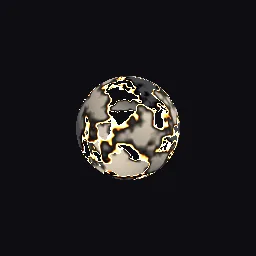
Dissolve a mesh by discarding fragments where 3D object-space noise falls below a threshold, with a glowing ember edge and a charred band behind it. Drive the threshold from a script or let it loop.
godot shaders
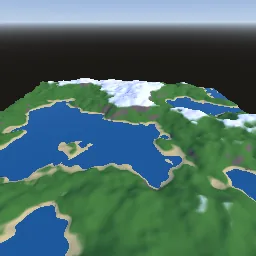
Turn a subdivided plane into terrain: fractal noise displaces the vertices, a sea level flattens water, and the fragment stage paints sand, grass, rock and snow by height and slope.
godot shaders
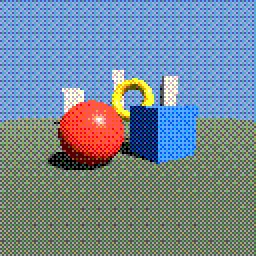
Dither the screen with an 8 x 8 Bayer matrix: reduce each channel to a few levels, or the image to two colours like a one-bit display, with adjustable dot scale and contrast.
godot shaders
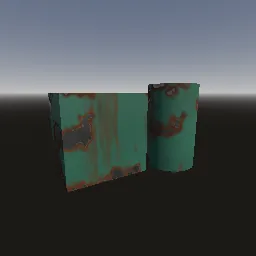
Weathered painted metal in layers: paint chips away in noisy patches to show bare metal, rust grows around the chips, and rust streaks run downward in world space below them.
godot shaders
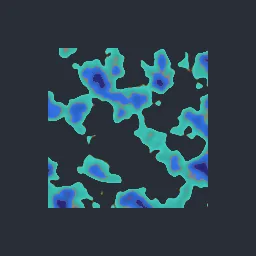
Recolour sprites at run time: up to three source colours are matched within a tolerance and replaced by target colours, optionally keeping the original shading, for team colours, skins and enemy variants.
godot shaders
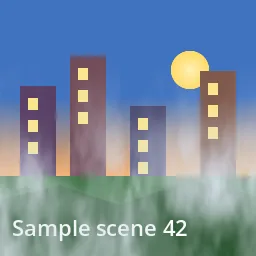
Drifting layered fog for 2D scenes: several fBm bands at different heights, speeds and opacities, denser toward the ground, drawn as a transparent overlay.
godot shaders
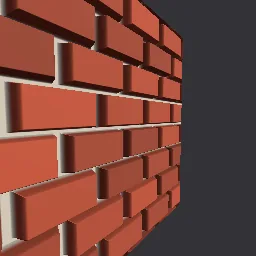
Brick wall with real-looking depth on a flat surface: the view ray is marched through a procedural brick heightfield in tangent space, so mortar lines sink, bricks occlude each other at angles, and the normal comes from the same height.
godot shaders
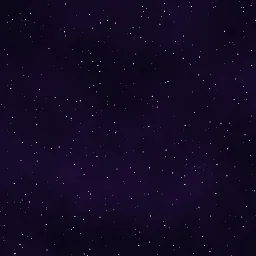
Fill a rectangle with a scrolling starfield: three layers of hashed stars at different densities, sizes and speeds for parallax, colour temperature per star, twinkle, and a scroll direction.
godot shaders
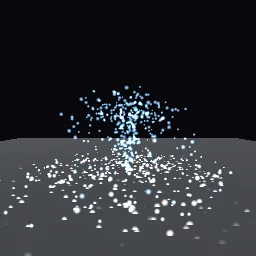
GPU particle process shader for a fountain: droplets leave a nozzle disc in a cone, swirl around the axis, fall under gravity, bounce once on a floor height and fade from water to spray colour.
godot shaders
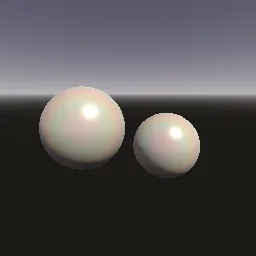
Pearl-like surface: a soft white body whose sheen drifts through pink, green and gold tints with the viewing angle, a broad satin highlight, a faint inner glow and a cool rim, for pearls, shells and lacquered toys.
godot shaders
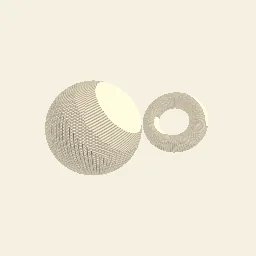
Pen-and-ink shading from scene lights: brighter areas stay paper, darker areas get one, two, three and four layers of hatching lines at different angles, aligned to the surface UVs so the strokes stick to the object.
godot shaders
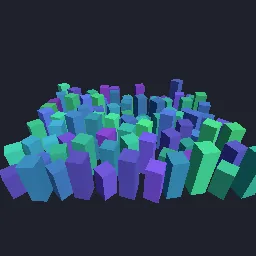
Give thousands of MultiMesh instances individual looks and motion from INSTANCE_ID alone: hue and brightness variation, random height scale, and a bobbing wave with its own phase per instance.
godot shaders
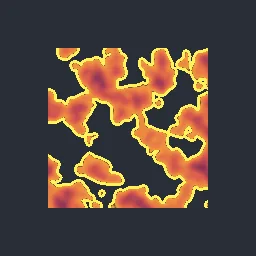
Draw an outline of a chosen width in texels around the opaque shape of a 2D sprite, with square or rounded corners, for selection highlights, pickups and pixel art.
godot shaders
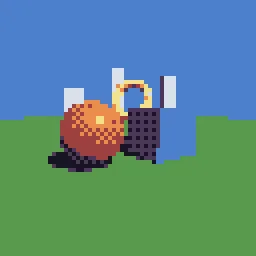
Pixelate the screen into blocks and snap each block to the nearest colour of a small palette texture, with optional ordered dithering between palette colours, for low-resolution retro looks.
godot shaders
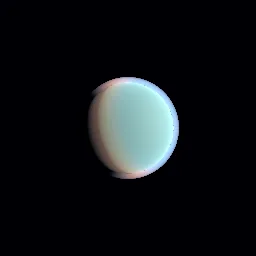
Atmosphere glow for planets: on a shell sphere around the planet, the length of each view ray through the atmosphere is computed analytically, turned into scattering with an exponential, and lit only on the sun side.
godot shaders
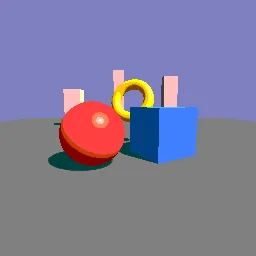
Reduce the image to a few flat tone levels per channel or on luminance only, quantizing after a gamma curve so steps are evenly spaced to the eye, with a hard or slightly softened step edge.
godot shaders
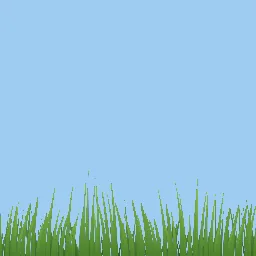
Fill a rectangle with layers of grass blades drawn procedurally: each blade has its own height, width, lean and colour, bends with travelling wind, and back layers are darker for depth.
godot shaders
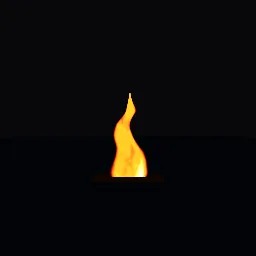
Fire on a single quad that always faces the camera: rising distorted noise shaped into a flame silhouette and coloured through a heat ramp, with no textures or particles.
godot shaders
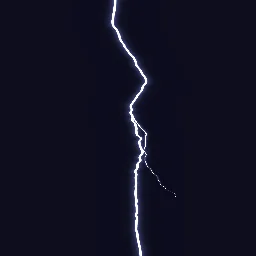
Draw a lightning strike: a jagged main bolt from top to bottom built from layered noise displacement, a branch splitting off, a wide glow, and a new random shape at every strike with flicker between strikes.
godot shaders
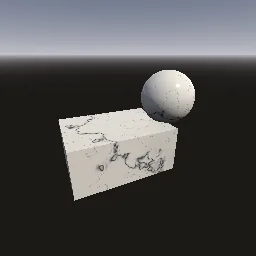
Polished marble in object space: veins from a sine of position bent by fractal turbulence, a second finer vein network, cloudy body variation and glossy finish, for floors, statues and counters without textures.
godot shaders
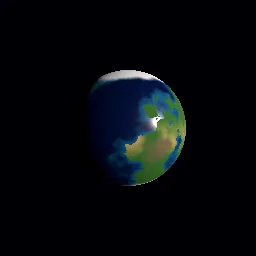
Paint a whole planet on a sphere from 3D noise of the surface direction: oceans with shallow coasts, land coloured by height and latitude, ridged mountains, polar ice caps and glossy water, with optional slow spin.
godot shaders
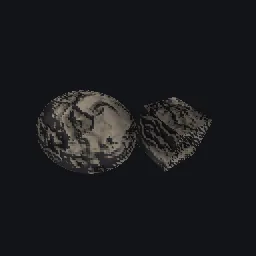
Rock material for meshes without usable UVs: layered and ridged noise projected along the three world axes and blended by the normal, with crevice darkening and screen-space bump mapping from the same height.
godot shaders
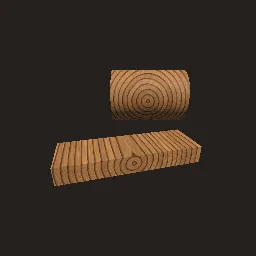
Solid wood from object-space 3D math: growth rings around a trunk axis with noisy distortion, sharp latewood bands, fine grain streaks along the axis and per-ring colour variation, so cut ends and long sides both read correctly.
godot shaders
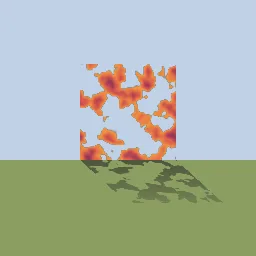
Turn a copy of a sprite into its cast shadow on the ground: the vertex stage flattens and skews it from the sprite's base toward a light direction, and the fragment stage fills it with a shadow colour that fades with distance from the feet.
godot shaders
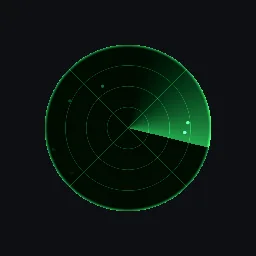
Unlit radar screen for a disc or quad: range rings and spokes, a rotating sweep with a phosphor trail, and blips at hashed positions that flare when the sweep passes and then fade.
godot shaders
Split the red, green and blue channels radially so colour fringes grow toward the screen edges like a cheap lens, with several samples per channel to smear the fringe instead of doubling it.
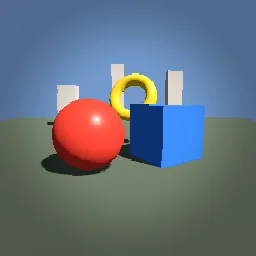
godot shaders
Bend the image like a real lens with the Brown-Conrady radial model: barrel or pincushion distortion from two coefficients, an automatic zoom that hides empty corners, and an optional dark rim.
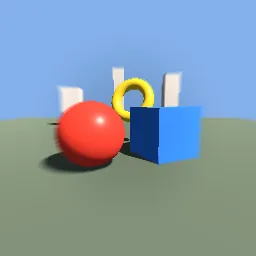
godot shaders
Streak the image toward or away from a screen point like a fast zoom or a speed burst, with no blur at the centre, adjustable strength, sample count and an optional brightness boost of the streaks.
godot shaders
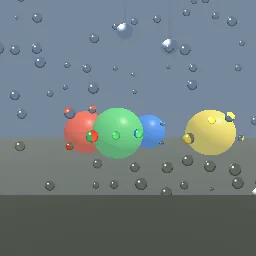
Window pane covered in rain: static droplets of random size scattered in cells, drops that run down with trails, each drop refracting a sharp upside-down view while the glass between them shows a blurred, misted scene.
godot shaders
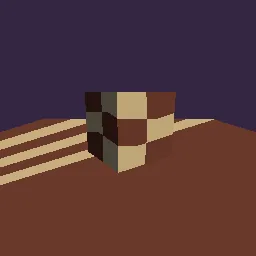
Recreate late-1990s console rendering: vertices snap to a coarse screen grid so geometry jitters, texture coordinates interpolate without perspective correction so textures warp, and colours drop to 15-bit with ordered dithering.
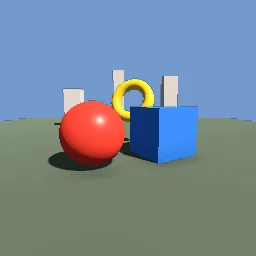
godot shaders
Darken creases and contacts with ambient occlusion estimated in one pass from the depth buffer: normals from position derivatives, a disc of samples scaled by distance, and a range check against far geometry.
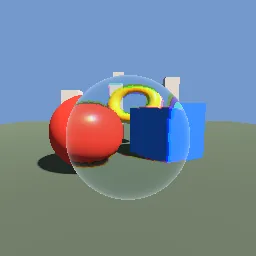
godot shaders
Transparent glass that bends the scene behind it by offsetting the screen texture with the view-space normal, splits the colour channels for dispersion, blurs with mip levels for frosted glass, and adds a Fresnel rim and tint.
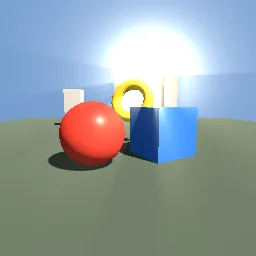
godot shaders
Crepuscular rays as a post process: sky pixels near the sun become light sources, and each pixel marches toward the sun's screen position accumulating them with decay, so objects cut dark shafts into the glow.
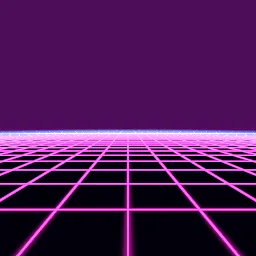
godot shaders
Retro synthwave floor: glowing grid lines with a soft halo that scroll toward the camera, colour shifting with distance and fading into a horizon haze.
godot shaders
Darken or tint the screen toward its edges with control over size, softness, roundness, aspect, colour and the point it centres on.
godot shaders
Show an impact on a spherical shield: a flash at the hit direction and a ring that travels over the sphere along great circles and fades, looping on a timer or driven by a script.
godot shaders
Run a bright diagonal shine band across a sprite at intervals, masked by the sprite's alpha, with control of angle, width, softness, speed and the pause between sweeps.
godot shaders
Add glow around bright areas without extra viewports: a soft threshold keeps only the bright parts, several blurred mip levels of the screen are summed with decreasing weights, and the glow is added back with a tint.
godot shaders
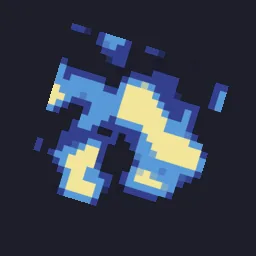
Keep pixel art crisp but free of shimmering when it is rotated, moved by sub-pixels or scaled by non-integer factors: texel edges are blended over exactly one screen pixel with linear filtering, interiors stay flat.
godot shaders
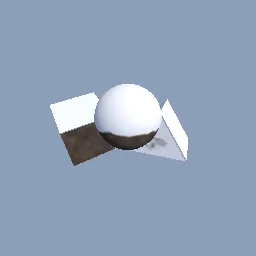
Cover the upward-facing parts of any mesh with snow: world-space normal direction decides coverage, noise breaks the border, a small vertex lift thickens it, and glints sparkle at the viewing angle.
godot shaders
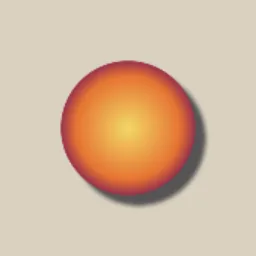
Add an offset, softened drop shadow behind a sprite's shape without an extra node: the shader samples the alpha at an offset with a small blur and composites the sprite over it.
godot shaders
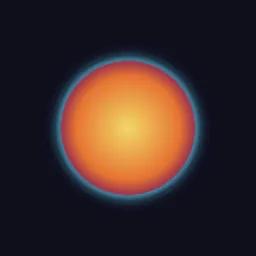
Surround a sprite's shape with a soft coloured glow: alpha is gathered in rings around each texel, giving a smooth halo that can pulse, drawn under the sprite.
godot shaders
Transparent card material for smoke, dust and glow sprites that removes the hard line where the card cuts into geometry: alpha fades by the distance to the scene depth behind it, and near the camera.
godot shaders
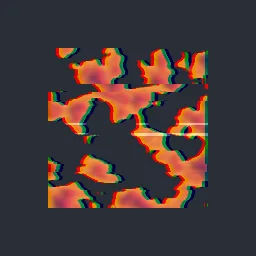
Glitch a sprite: horizontal slices jump sideways in random time slots, the red and blue channels split apart, and occasional bright scan bands flicker, all masked to the sprite's own texture.
godot shaders
Animate a sprite with volume-preserving squash and stretch around a pivot at its base: a looping bounce curve with adjustable amount, speed and pivot, or a fixed amount set from a script.
godot shaders
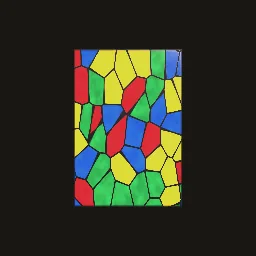
Backlit stained glass: Voronoi cells filled with colours from a palette and slight glass mottling, separated by dark lead came lines, glowing as if lit from behind and slightly translucent.
godot shaders
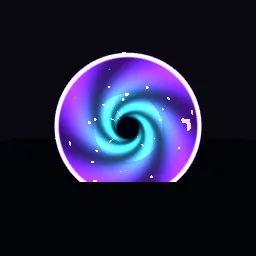
Unlit portal surface: spiral arms twist toward the centre in polar coordinates, a bright rim ring and a dark core frame it, noise sparkles drift inward, and everything outside the disc is transparent.
godot shaders
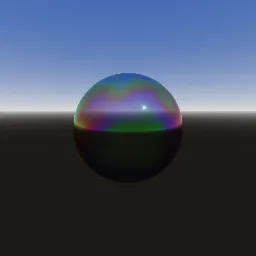
Iridescent colours of soap bubbles and oil films from a two-beam thin-film interference estimate per colour channel, with film thickness swirled by noise so the colours drift.
godot shaders
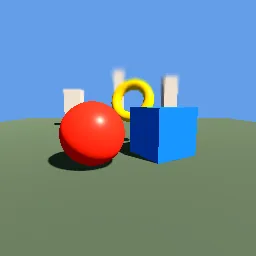
Make a scene look like a miniature model: a horizontal band stays sharp while blur grows above and below it, with boosted saturation and contrast as in tilt-shift photographs.

godot shaders
Cel-shade a lit mesh in a chosen number of flat light bands with tinted shadows and add a view-dependent rim that is stronger on the lit side. Use for stylized characters, props and toy-like scenes.
godot shaders
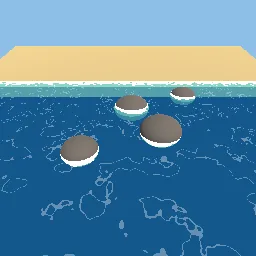
Flat-shaded stylized water: colour steps from shallow to deep by the water depth read from the depth buffer, a foam band with a noisy edge around anything that touches the surface, and drifting ripple lines.
godot shaders
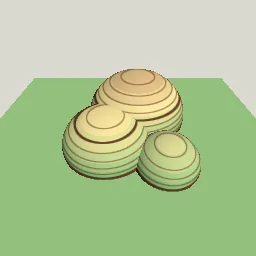
Map-style shading by world height: minor and major contour lines of constant pixel width every few metres, hypsometric colour bands from lowland green to highland brown and white, on any mesh.
godot shaders
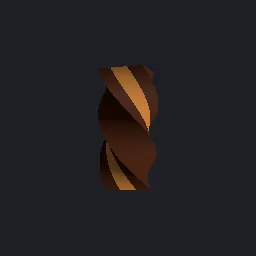
Twist a mesh around its object Y axis by an angle that grows with height, with an optional wobble over time, rotating normals along so lighting follows the spiral.
godot shaders
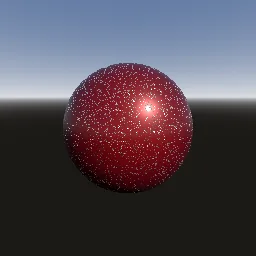
Car paint with a colour that shifts from face to edge, glittering metal flakes from hashed object-space cells whose tilted normals catch the light, and a glossy clear coat layer.
godot shaders
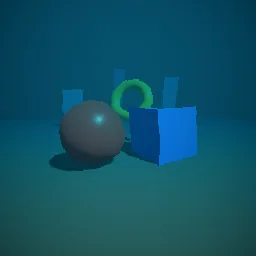
Make the camera look underwater: wavy screen distortion, wavelength-dependent absorption by distance from the depth buffer (red fades first), a blue-green scattering colour, brighter light from above and a vignette.
godot shaders
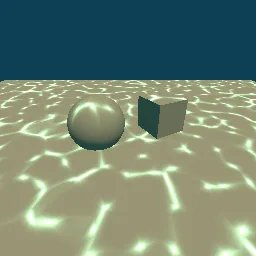
Animated caustic light network on any surface that faces up: two drifting Voronoi layers combine into bright web lines that brighten the albedo, with depth falloff and a blue-green tint.
godot shaders
Sharpen the rendered image with an unsharp mask: the difference between each pixel and a small blur of its neighbourhood is added back, with a threshold that leaves noise and flat areas alone and a luminance-only option.
godot shaders
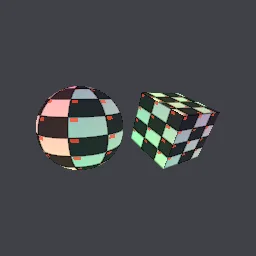
Debug a mesh's UV layout: a numbered-style checker with red and green ramps showing the U and V directions, cell lines, and an optional heat map of texel stretching from screen-space UV derivatives.
godot shaders
Velvet and plush fabric with a custom light function: a dark, soft diffuse core and a bright sheen that appears where the surface turns away from the viewer and catches the light, plus back-scatter toward the light.
godot shaders
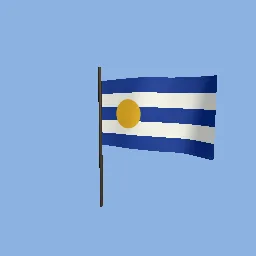
Animate a flag on a subdivided quad: travelling waves grow away from the pole edge, a droop adds weight, analytic derivatives rebuild the normals, and the face shows procedural stripes and a disc or an assigned texture.
godot shaders
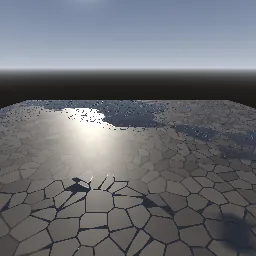
Rainy ground: procedural cobblestones darken and turn glossy with wetness, puddles fill the grout and low areas from a noise mask, and raindrop rings ripple the puddle normals.
godot shaders
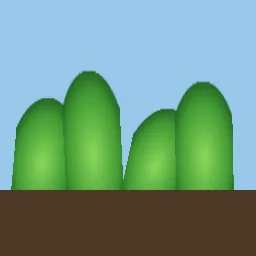
Sway 2D foliage in the wind by shearing the sprite's top while its base stays planted, with a gust wave that travels across the scene and a phase taken from each node's position so neighbours move out of step.
godot shaders
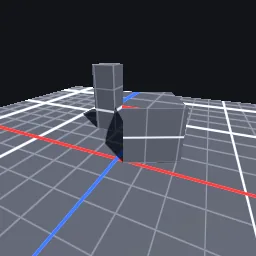
Anti-aliased world-space grid for level blockouts: minor and major lines of constant pixel width, X and Z axis lines in colour, projection picked from the dominant normal axis so floors and walls both get squares, and distance fade.
godot shaders
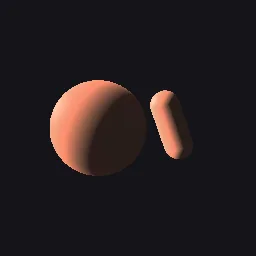
Soft skin and wax look with a custom light function: wrapped diffuse that lets light bleed past the terminator in a warm scatter colour, translucency where light comes from behind, and a soft specular.
godot shaders
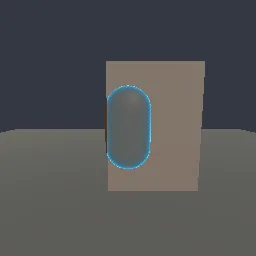
Keep a character or item visible through walls: the visible part renders as a lit surface, the part hidden behind other geometry renders as a coloured see-through silhouette with a rim, decided per pixel against the depth buffer.
procedural textures
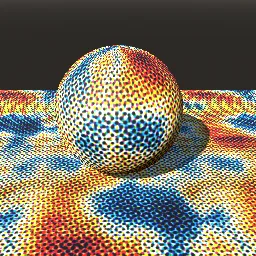
Generate tileable maps of printed halftone: a procedural design separated into inks and screened as round dots on rotated whole-number lattices at classic angles, with misregistration, dot gain and fibrous aged paper. Use for comic and pop-art surfaces, posters, newspapers, packaging and print-themed backgrounds.
procedural textures
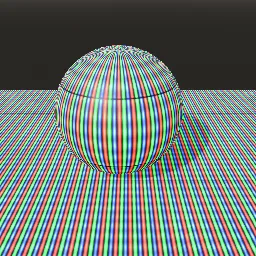
Generate tileable maps of a CRT screen's phosphor layer: aperture-grille stripes with damper wires, a delta shadow mask of RGB dots or a staggered slot mask, with scanlines and an optional picture, as glowing emissive subpixels. Use for retro monitors, arcade cabinets, terminals and screen overlays.
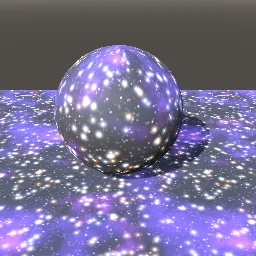
procedural textures
Generate tileable maps of a star field: blackbody-coloured stars with halos and diffraction spikes over glowing nebula gas and dark dust lanes, with an emissive map holding the light. Use for space backdrops, sci-fi skies, starship windows and planetarium props.
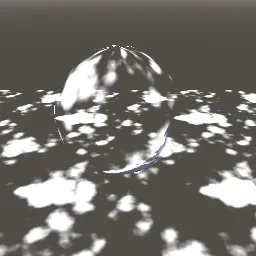
procedural textures
Generate tileable maps of a cloud layer with alpha: billowing cumulus, an overcast stratus sheet, cirrus streaks, a mackerel sky of puffs in rows or a dark storm, each a distinct density field lit from a sun direction. Use for sky planes and domes, flight and strategy game skies, and backdrops.
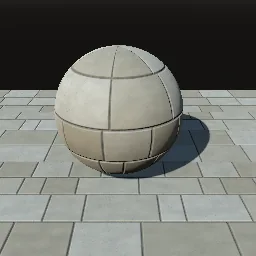
procedural textures
Generate tileable PBR maps of dressed stone ashlar: coursed rows of varying height or broken ashlar with blocks one or two rows high, thin joints, and faces rubbed smooth, rock-faced inside a drafted margin or bush-hammered, in limestone, granite or sandstone. Use for walls, plinths, facades and castles.
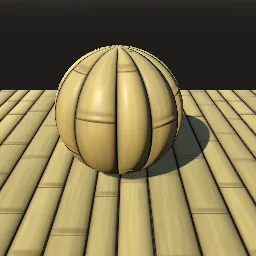
procedural textures
Generate tileable PBR maps of bamboo: culms side by side with nodes at uneven heights, node ridges, sheath scars and waxy bands, fibre streaks and spotted mottles, or split slats as in a blind or mat. Use for fences, screens, furniture, wall cladding, rafts and tropical scenes.
procedural textures
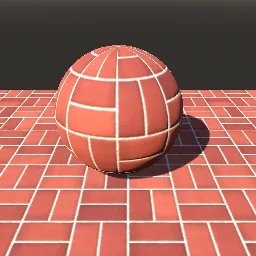
Generate tileable PBR maps of pavers laid in basket weave: two, three or four pavers per square turning in a checkerboard, with sand joints, worn rounded edges, fired flashing, settling and optional moss. Use for patios, garden paths, courtyards and sidewalks.
procedural textures
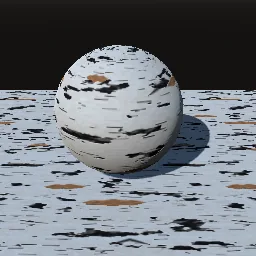
Generate tileable PBR maps of birch bark: chalk-white papery bark with horizontal lenticels, chevron branch scars, dark fissured patches and peeling strips. Use on birch trunks and logs.
procedural textures
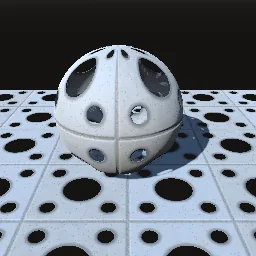
Generate tileable PBR maps with alpha of a breeze block screen wall: stacked concrete or clay blocks with mortar joints and cut-out openings (circles, quatrefoils, diamonds, flowers or a grille), darkened inner walls and weathering. Use for mid-century facades, garden screens and balconies.
procedural textures
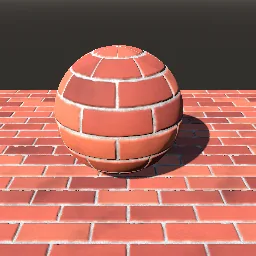
Generate tileable PBR maps of a brick wall in running, Flemish, English or stack bond, with recessed mortar, rounded and chipped edges and per-brick colour. Use for building walls, chimneys and garden walls.
procedural textures
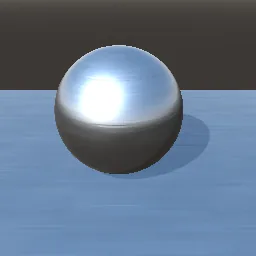
Generate tileable PBR maps of brushed metal: fine directional micro-grooves at two scales, a few deeper scratches and faint smudges, on stainless steel, aluminium, brass, copper or titanium. Use for appliances, panels, trims, watches and props.
procedural textures
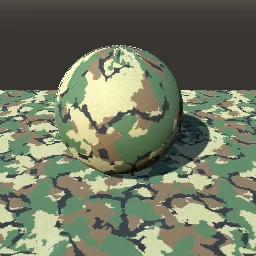
Generate tileable maps of printed camouflage cloth in five pattern families (woodland blobs and branches, digital pixels, tiger stripes, desert with rock spots, splinter shards with rain dashes) on a twill-like weave. Use for uniforms, gear, vehicle covers, tents and military props.
procedural textures
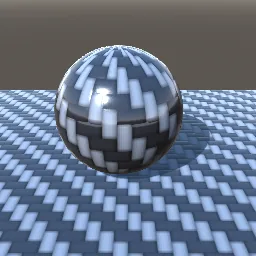
Generate tileable PBR maps of carbon fibre composite: 2x2 twill or plain weave tows with fibre lines and direction-dependent sheen, forged carbon from chopped-fibre patches, or an aramid hybrid weave, under gloss or matte finish. Use for car parts, helmets, bicycles, cases and props.
procedural textures
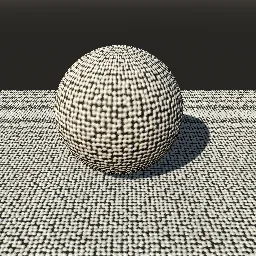
Generate tileable PBR maps of carpet: cut-pile tuft tips with twisted plies, loop pile in rows, flecked berber loops or long shag strands, with pile shading. Use for floors, rugs, stair runners, car interiors and office carpet in interiors and archviz.
procedural textures
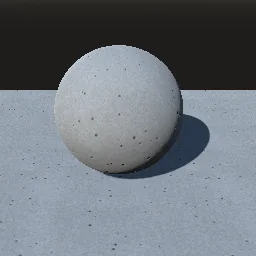
Generate tileable PBR maps of cast concrete: cement mottling, bug holes, smooth, board-formed or panel formwork marks with tie holes, water stains, exposed aggregate and polished floors. Use for walls, floors and brutalist architecture.
procedural textures
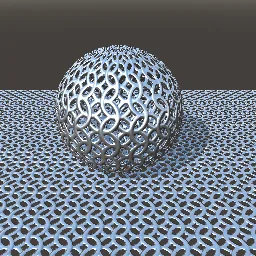
Generate tileable PBR maps of chain mail in the European 4-in-1 weave with alpha gaps: tilted rings in staggered rows, each passing over two neighbours and under two, in bright steel, blackened steel, brass or rusty iron. Use for armour, curtains, fantasy props and costumes.
procedural textures
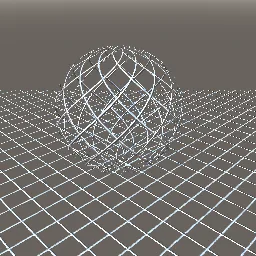
Generate tileable PBR maps of chain-link fence with alpha openings: two families of diagonal wires alternating over and under at every crossing, round wire profiles, galvanized, green vinyl-coated, black or rusty. Use for fences, cages, construction sites and backgrounds.
procedural textures
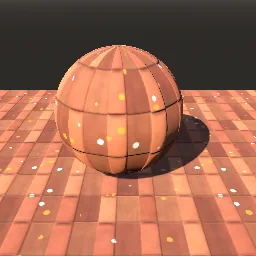
Generate tileable PBR maps of a clay tile roof in overlapping courses: barrel tiles (concave pans with half-round covers) or S-shaped pantiles, with stepped noses and dark cavities, per-tile colour, glazed or unglazed finish, lichen, moss and dirt streaks. Use for Mediterranean, mission, rural and East Asian roofs.
procedural textures
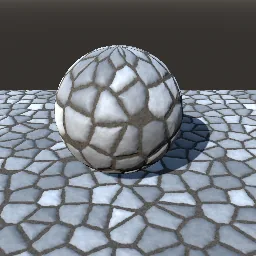
Generate tileable PBR maps of cobblestone or sett paving: domed, worn stones from Voronoi cells with soil, sand or moss in the joints. Use for streets, courtyards, castle floors and garden paths.
procedural textures
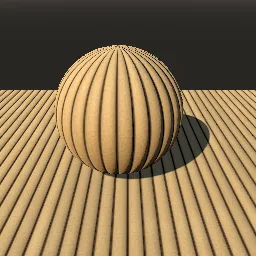
Generate tileable PBR maps of corduroy: rounded cut-pile wales running down the tile, grooves showing the ground weave, pile grain and lustre, crushed worn tops, and thick-and-thin wales. Use for trousers, jackets, upholstery, cushions and soft furnishings.
procedural textures
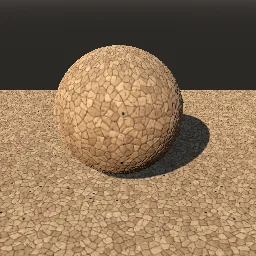
Generate tileable PBR maps of cork: agglomerated granules with finer fragments, crevices, pores and pin holes, sealed cork floor tiles, dark expanded cork insulation, or natural cork with dark lenticels. Use for notice boards, floors, wall panels, coasters, stoppers and insulation.
procedural textures
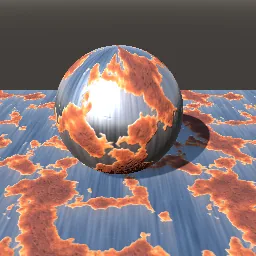
Generate tileable PBR maps of corroding metal: rust on steel or verdigris on copper, with layered oxide, pits, flaking crust and drip stains, and a metallic map that separates bare metal from oxide. Use for industrial props, ships, pipes and old roofs.
procedural textures
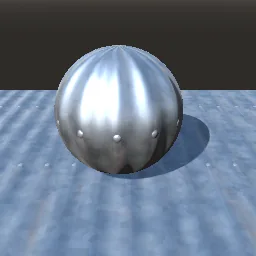
Generate tileable PBR maps of corrugated sheet metal with a sine or box rib profile, galvanized or painted, with screw rows, rust streaks running down from screws and patches, and dirt in the valleys. Use for sheds, barns, fences, shacks and industrial cladding.
procedural textures
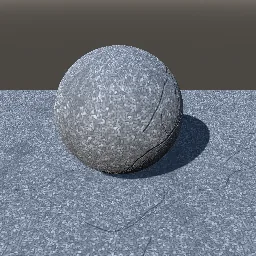
Generate tileable PBR maps of asphalt paving: aggregate stones in bitumen, wandering and branching cracks, alligator cracking, tar sealant and stains. Use for roads, parking lots and urban ground.
procedural textures
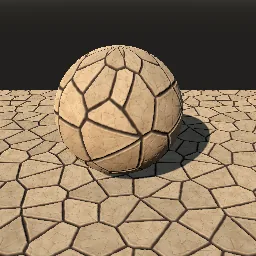
Generate tileable PBR maps of dried mud and desert pans: Voronoi plates with open cracks and curled edges, finer secondary cracks, damp patches, or raised salt-crust ridges. Use for deserts, dry lakes and drought scenes.
procedural textures
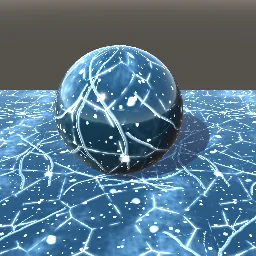
Generate tileable maps of frozen lake ice: clear black or milky ice with white fracture planes, a polygonal crack network, trapped air bubbles, stacked methane bubbles and skate scratches. Use for frozen lakes, rinks, ice caves and winter ground.
procedural textures
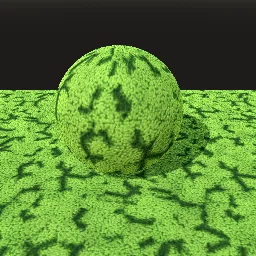
Generate tileable PBR maps of cushion moss: merged mounds of tiny shoots with dark crevices, lighter tips, dry browning and optional spore capsules. Use on rocks, logs, roofs and forest ground.
procedural textures
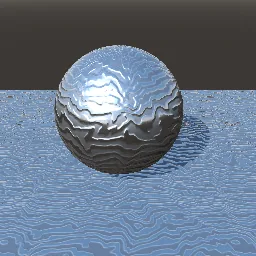
Generate tileable PBR maps of etched Damascus (pattern-welded) steel: bright and dark layers in random, ladder, raindrop or chevron patterns, with varying layer thickness, etch relief and grinding lines, and fine layers kept free of moire. Use for knife blades, swords, rings and props.
procedural textures
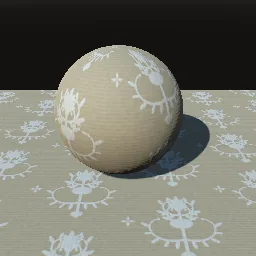
Generate tileable maps of damask wallpaper or fabric: a mirror-symmetric ornament grown from a seed (stem, palmette, curling scrolls, leaves) in a half-drop repeat, as tone-on-tone satin against matte, gold print, raised flock or a flat print. Use for period interiors, hotels, theatres and upholstery.
procedural textures
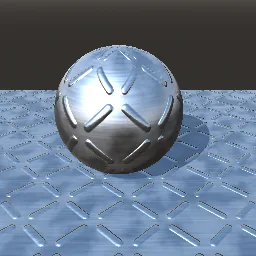
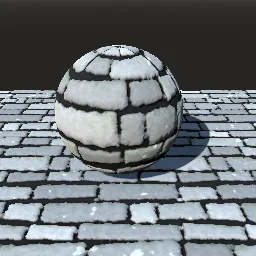
Generate tileable PBR maps of diamond tread plate (checker plate): elongated raised lugs in alternating diagonals, polished lug tops, dirt in the valleys and paint worn through to bare metal. Use for floors, steps, ramps, truck beds and industrial props.
procedural textures
Generate tileable PBR maps of a dry stone wall: irregular, tapered flat stones stacked in rough courses without mortar, deep dark voids, small chinking stones wedged into the joints, lichen patches and moss. Use for field walls, terraces, ruins and rural buildings.
procedural textures
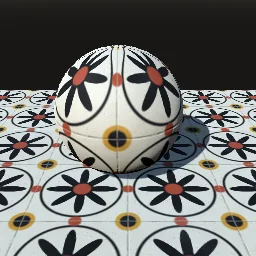
Generate tileable PBR maps of encaustic cement tiles: inlaid colour motifs with the eightfold symmetry of the square (stars, florals, nested geometry, rosettes in frames) whose edge shapes join across tiles, on matte cement with pores and wear. Use for kitchens, bathrooms and cafe floors.
procedural textures
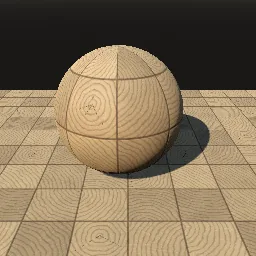
Generate tileable PBR maps of end-grain wood blocks, as in a butcher block or end-grain parquet: rings around each block's pith, medullary rays, radial checks and glue lines. Use for cutting boards, workbenches and block floors.
procedural textures
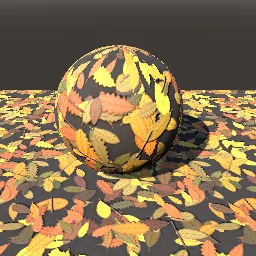
Generate tileable PBR maps of a forest floor: stacked fallen leaves with midribs, veins and curled edges, twigs and dark soil, in autumn, oak, wet or maple colours. Use for woodland ground and paths.
procedural textures
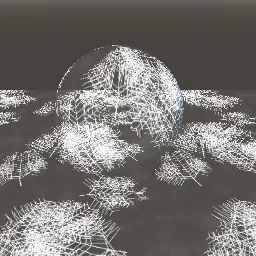
Generate tileable maps of frost on glass: fern-like ice dendrites that branch at about 60 degrees from well-spaced seeds, with rime haze, in an albedo whose alpha is nearly opaque frost over nearly clear glass. Use as an overlay on windows, windscreens, freezer doors and icy props.
procedural textures
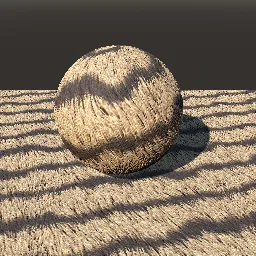
Generate tileable PBR maps of animal fur: thousands of tapered strands combed along a smooth flow field, gathered into locks, with banded hairs and coat patterns (solid, tabby stripes, spots or rosettes). Use for creature and animal skins, fur trims, rugs, plush toys and stylized characters.
procedural textures
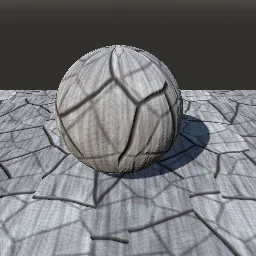
Generate tileable PBR maps of tree bark with the trunk axis along the tile height: plates and furrows, interlaced ridges or stringy fibres, with cross-checks, lichen and moss. Use on tree trunks, logs and wooden props.
procedural textures
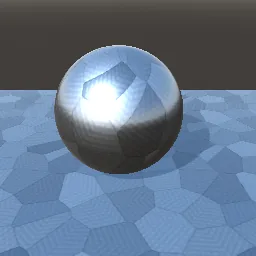
Generate tileable PBR maps of hot-dip galvanized steel: zinc crystals (spangles) that each take their own brightness and roughness, feathered dendrites inside every crystal, and optional dull white zinc corrosion. Use for ducts, railings, buckets, roofing and industrial props.
procedural textures
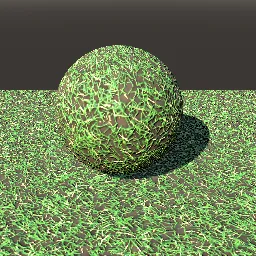
Generate tileable PBR maps of grass seen from above: thousands of tapered blades layered with a z-buffer over soil, from mown lawn to meadow with flowers or dry summer grass. Use for ground planes and top-down games.
procedural textures
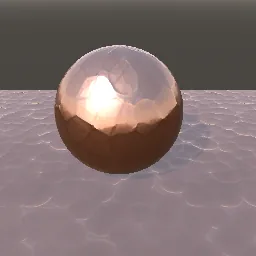
Generate tileable PBR maps of hand-hammered metal: overlapping dimples from Voronoi hammer blows meeting in polished ridges, optional fine planishing marks and patina in the dimples, in copper, pewter, brass or silver. Use for cookware, sinks, lamps, jewellery and decorative panels.
procedural textures
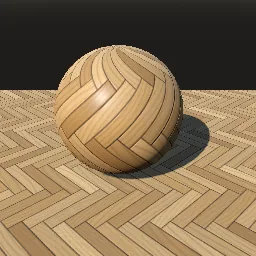
Generate tileable PBR maps of wood parquet in herringbone, double or triple herringbone and chevron, with exact periodic layouts, grain along each plank, bevelled joints, lacquer or oil finish and wear. Use for floors of rooms, halls and furniture panels.
procedural textures
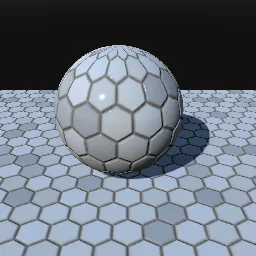
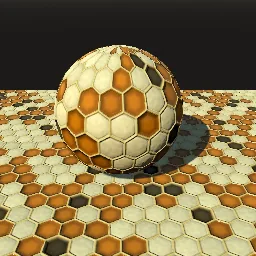
Generate tileable PBR maps of hexagonal ceramic tiles on a periodic hex lattice, with grout, rounded and pillowed glaze, chipped edges and a colour rule (random accents, scattered flowers, alternating rows or clustered blends). Use for bathroom and kitchen walls, floors and terracotta paving.
procedural textures
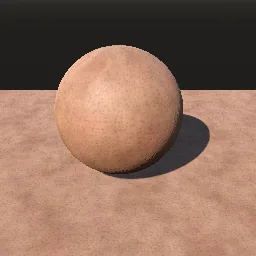
Generate tileable PBR maps of honeycomb: hexagonal wax cells with rounded walls, empty tubes, glossy honey that climbs the walls and domed wax caps in patches, from new white comb to dark brood comb. Use for beehives, honey props, food scenes, nature close-ups and sci-fi hex surfaces.
procedural textures
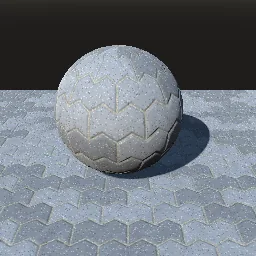
Generate tileable PBR detail maps of human skin: pores of varied size, the polygonal furrow network stretched along tension lines, aged creases, melanin and redness variation, freckles and oily or dry roughness, in several skin tones. Use as tiling detail on characters, faces, hands and creature skin.
procedural textures
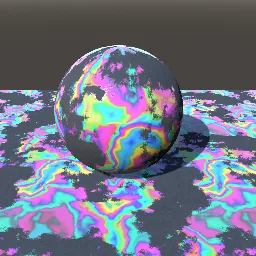
Generate tileable PBR maps of interlocking concrete pavers in stretcher bond whose curved sides mate exactly: zigzag, dogbone (I shape) or wavy, with chamfers, sand joints, exposed aggregate, tumbled edges and per-paver colour blends. Use for driveways, plazas, sidewalks and parking areas.
procedural textures
Generate tileable maps of thin-film interference colours: oil on puddles in asphalt, a spill on harbour water, a soap film or heat tint on steel, with colours computed from film thickness, refractive indices and colour-matching functions. Use for wet streets, polluted water, bubbles and welded metal.
procedural textures
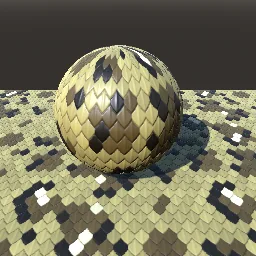
Generate tileable PBR maps of snake skin: overlapping keeled scales on a rhombic lattice with python blotches, coral bands, dorsal diamonds or a plain speckled skin, coloured scale by scale. Use for snakes, lizards, dragons, reptile-leather goods and creature props.
procedural textures
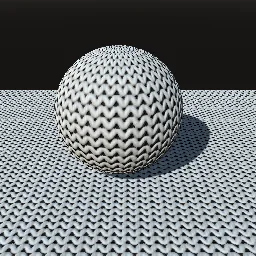
Generate tileable PBR maps of knitted fabric: stockinette Vs, purl bumps, garter ridges, k2p2 rib or seed stitch, with twisted plies, fuzz and optional stripes or a stranded two-colour motif. Use for jumpers, scarves, hats, blankets and cosy props.
procedural textures
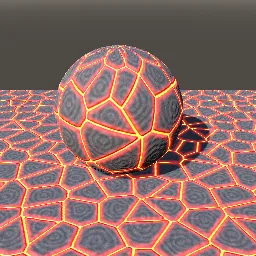
Generate tileable PBR maps of a lava flow: dark cooling crust plates with ropy wrinkles over molten cracks, with an emissive map whose colour follows a heat ramp. Use for volcanic ground, forges and fantasy hazards.
procedural textures
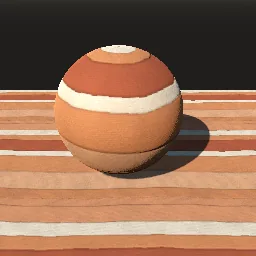
Generate tileable PBR maps of layered sandstone: wavy strata of uneven thickness, cross-bedding, differential erosion and optional honeycomb weathering. Use for cliffs, canyon walls, building stone and desert rock.
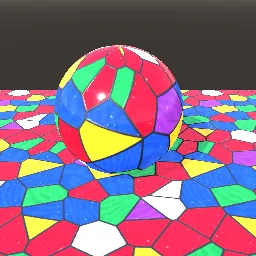
procedural textures
Generate tileable maps of leaded stained glass: irregular cathedral pieces, diamond quarries or circles in squares, each pane a hashed glass colour with streaks and seed bubbles in raised lead came, with an emissive map of the light through it. Use for church, Victorian and fantasy windows and lamps.
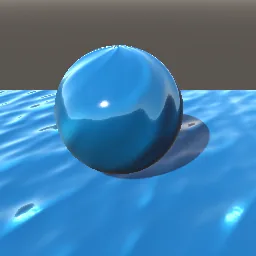
procedural textures
Generate tileable maps of a water surface: a sum of directional sine waves with whole-number wave vectors drawn from a wind-sea spectrum, Gerstner-style crest sharpening and whitecap foam where crests compress. The normal map is the main output for water shaders; calm swell to storm presets.
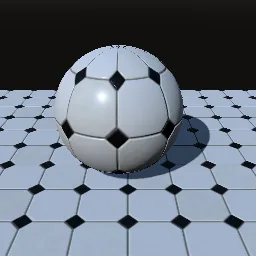
procedural textures
Generate tileable PBR maps of the octagon and dot pattern: octagons on a square grid with small square dots at their corners, grout, bevels, glazed, terracotta or marble finishes with veins that break at the joints, and wear. Use for bathroom, kitchen and hallway floors and Victorian or classic interiors.
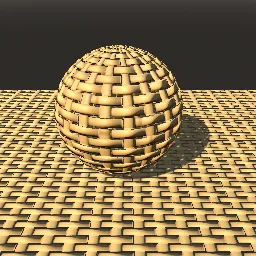
procedural textures
Generate tileable PBR maps of wicker: round weavers passing over and under round stakes in randing, double randing or over-two weaves, with open gaps in the albedo alpha, fibre streaks, rattan nodes and worn paint. Use for baskets, wicker chairs, hampers, screens and garden furniture.
procedural textures
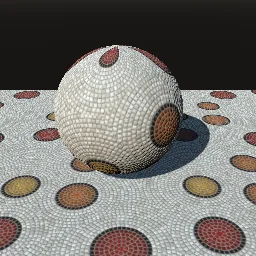
Generate tileable PBR maps of opus vermiculatum mosaic: rows of small tesserae that ring round motifs, outline them and fill the background, meeting along irregular seams, in stone, terracotta or glass smalti with metallic gold. Use for Roman and Byzantine floors, walls, pools and panels.
procedural textures
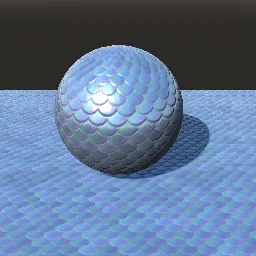
Generate tileable PBR maps of fish skin: round overlapping scales showing their rear crescents, with growth rings, radial grooves, pigmented edges, a silver colour sheen and koi patches or trout spots. Use for fish, mermaid tails, sea creatures, fantasy armour and aquarium props.
procedural textures
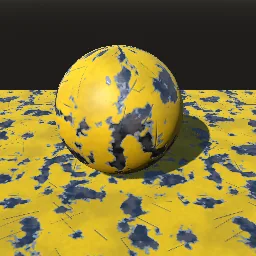
Generate tileable PBR maps of painted steel worn through in layers: top coat, primer and bare metal at stepped chip edges, scratches cut to the metal, rust and grime, with a metallic map for the exposed steel. Use for machinery, vehicles, containers and railings.
procedural textures
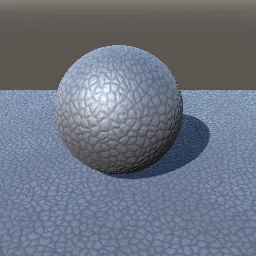
Generate tileable PBR maps of leather: rounded pebble grain with a crease network, fine creases, pores, fold wrinkles, burnished wear, a cracked old finish or a brushed suede nap. Use for car seats, sofas, bags, saddles, jackets, book covers and armchairs.
procedural textures
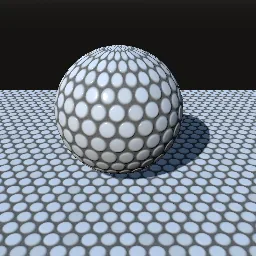
Generate tileable PBR maps of penny round mosaic: small domed round tiles in hexagonal close packing or on a square grid, with grout between, hand-set offsets, glaze rings and a colour rule (weighted blend, scattered accents or drifting clusters). Use for bathroom floors, shower walls and backsplashes.
procedural textures
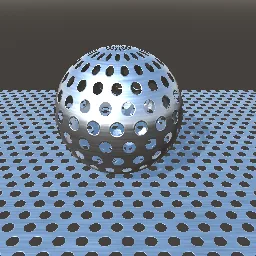
Generate tileable PBR maps of perforated sheet metal with alpha cut-outs: staggered or straight round holes, square holes, slots or hexagons on a repeating lattice, with punching burrs, rolled grain and optional paint. Use for grilles, speaker covers, screens, stair treads and facades.
procedural textures
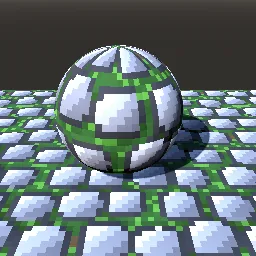
Generate a tileable pixel-art cobblestone or sett path at a chosen art resolution: outlined superellipse stones from round cobbles to square setts, shaded from a top-left light, with grass tufts or dirt in the joints and wet glints, plus per-pixel normal, height, roughness and occlusion maps. Use for 2D roads.
procedural textures
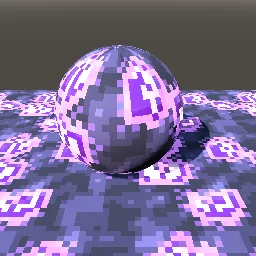
Generate a tileable pixel-art cave wall at a chosen art resolution: lumpy rock shaded from a top-left light, clusters of faceted pencil-shaped crystals with lit and dark faces, glints and outlines, and a glow halo on the rock, with an emissive map plus per-pixel normal, height, roughness and occlusion maps.
procedural textures
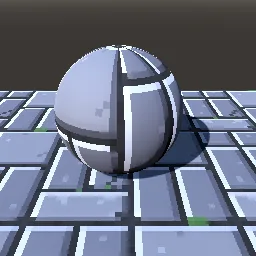
Generate a tileable pixel-art flagstone floor at a chosen art resolution: random-ashlar slabs of one or two cells with dark joints, lit and shadow bevels, chipped corners, branching cracks, moss in the joints and glossy puddles, with per-pixel normal, height, roughness and occlusion maps. Use for dungeon floors.
procedural textures
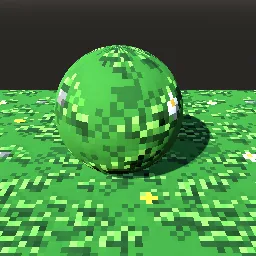
Generate a tileable pixel-art grass tile at a chosen art resolution (16 to 64 pixels), enlarged with crisp nearest-neighbour pixels: dithered lawn patches, blade tufts, flowers and pebbles, with per-pixel normal, height, roughness and occlusion maps. Use for top-down and side-view 2D games.
procedural textures
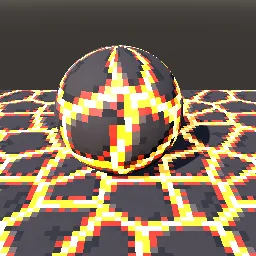
Generate a tileable pixel-art lava tile at a chosen art resolution: dark crust plates with lit and shadowed edges over glowing cracks with a pale core, or crust islands in a bubbling lava lake, with an emissive map and per-pixel normal, height, roughness and occlusion maps. Use for volcanic 2D game levels.
procedural textures
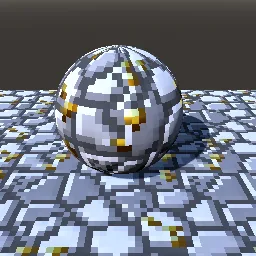
Generate a tileable pixel-art rock tile at a chosen art resolution: bevelled stone chunks with one-pixel crevices, evenly spread clusters of gold, iron or copper nuggets or gems with highlights, and cracks, with metallic, normal, height, roughness and occlusion maps. Use for mining walls and cave blocks in 2D games.
procedural textures
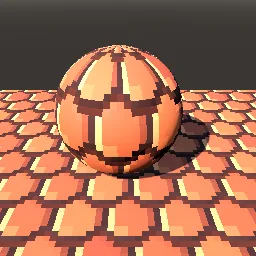
Generate a tileable pixel-art roof at a chosen art resolution: courses laid from the eaves up with square, round fish-scale or pointed tile ends, cast shadows on the course below, lit and shaded edges, tints, wood grain and moss, with per-pixel normal, height, roughness and occlusion maps. Use for 2D houses.
procedural textures
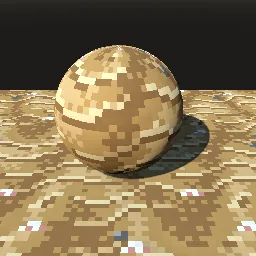
Generate a tileable pixel-art sand tile at a chosen art resolution: broad dune shading turned into stepped Bayer-dithered bands, wavy wind ripple lines with light crests and shadowed troughs, shells and pebbles, with per-pixel normal, height, roughness and occlusion maps. Use for beaches and deserts in 2D games.
procedural textures
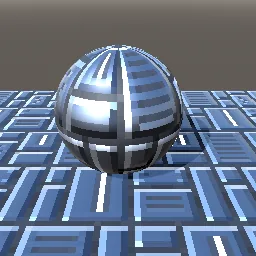
Generate a tileable pixel-art sci-fi plating module at a chosen art resolution: panels split into plates with seams and bevels, each with rivets, vent slits, a grille, a light strip, indicator lamps or hazard stripes, with metallic, emissive, normal, height, roughness and occlusion maps. Use for 2D space stations.
procedural textures
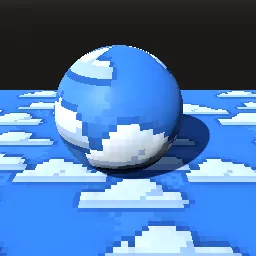
Generate a pixel-art sky tile that repeats both ways at a chosen art resolution: a flat sky with faint dithered patches, cumulus clouds of round puffs on a flat base, lit from the top left with an optional outline, and stars at night, plus per-pixel normal, height, roughness and occlusion maps. For 2D backgrounds.
procedural textures
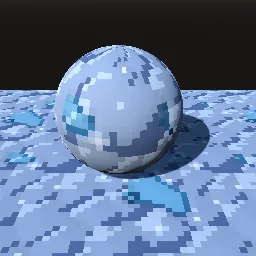
Generate a tileable pixel-art snow and ice tile at a chosen art resolution: lumpy drift mounds with lit caps and blue shadows, sparkles, glossy ice patches with diagonal highlight streaks, rims and cracks, and dirt for trodden snow, with per-pixel normal, height, roughness and occlusion maps. Use for 2D winter levels.
procedural textures
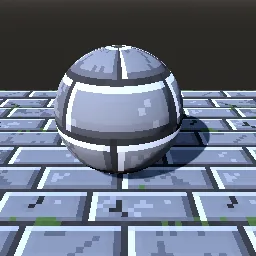
Generate a tileable pixel-art brick or stone-block wall at a chosen art resolution: staggered courses, one-pixel mortar, light and shadow bevels on every brick, grain, cracks and moss, with per-pixel normal, height, roughness and occlusion maps. Use for castle, dungeon and town walls in 2D games.
procedural textures
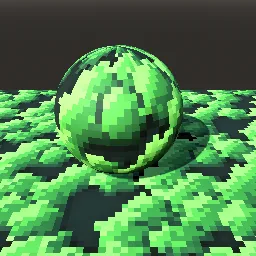
Generate a tileable pixel-art foliage tile at a chosen art resolution: overlapping scalloped leaf clumps shaded in four tones with dark rims, single leaves or needle strokes, deep gaps, fruit and blossoms, with per-pixel normal, height, roughness and occlusion maps. Use for tree tops, hedges and jungle walls in 2D.
procedural textures
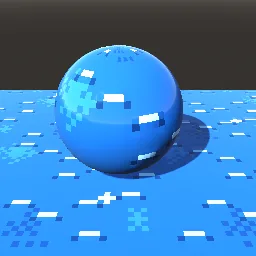
Generate a tileable pixel-art water tile at a chosen art resolution: dithered depth shades, evenly spread wave glyphs, sparkles, an optional caustic light network and foam clusters, with per-pixel normal, height, low roughness and occlusion maps. Use for seas, lagoons, swamps and rivers in 2D games.
procedural textures
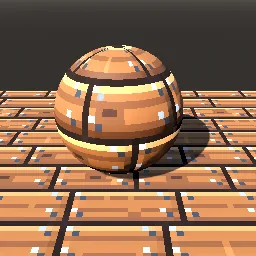
Generate a tileable pixel-art plank floor or wall at a chosen art resolution: staggered boards with dark gaps, highlight and shadow edges, hand-drawn grain lines, knots and nail heads, with per-pixel normal, height, roughness and occlusion maps. Use for floors, decks, crates and cabin walls in 2D games.
procedural textures
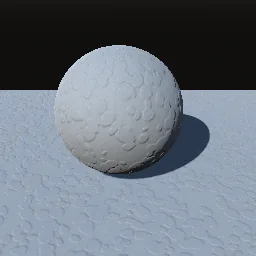
Generate tileable PBR maps of interior and exterior plaster finishes: knockdown, burnished Venetian trowel and sand float. Use for walls, ceilings and facades.
procedural textures
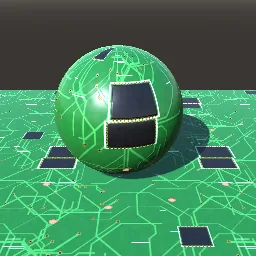
Generate tileable PBR maps of a printed circuit board: solder mask, raised traces routed with 45-degree turns, vias, chips with pins, silkscreen marks and indicator LEDs in the emissive map, plus a stylized glowing-trace board. Use for electronics props, screens and science fiction surfaces.
procedural textures
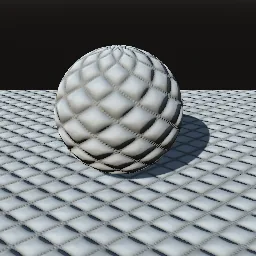
Generate tileable PBR maps of quilted fabric: diamond, square or channel quilting with puffed panels, stitched seams, crinkles and a fine weave, or deep-buttoned tufting. Use for bedspreads, puffer jackets, moving blankets, padded walls, headboards and Chesterfield sofas.
procedural textures
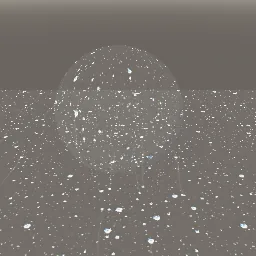
Generate tileable maps of rain on a window: droplets in three size classes as merging domes, running drops that leave meandering trails and beads, and condensation mist wiped clear by them, with an alpha overlay and a normal map for refraction. Use for windows, windscreens, visors and wet camera lenses.
procedural textures
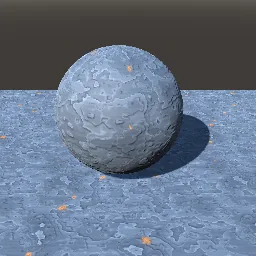
Generate tileable PBR maps of riven slate: cleft terraces with short steps, fine riving lines, tone changes between sheets and rusty iron spots. Use for roof slates, floor slabs, paving and wall cladding.
procedural textures
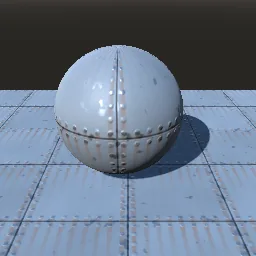
Generate tileable PBR maps of riveted plating: a grid of lapped plates at slightly different heights, rows of domed or flush rivets along every edge, rust or dirt streaks running down from each rivet, and paint worn on rivet heads and edges. Use for ship hulls, tanks, airframes and steampunk props.
procedural textures
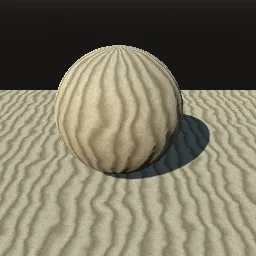
Generate tileable PBR maps of sand with wind or water ripples: asymmetric crests that bend, fork and merge, dark minerals in the troughs, optional dune swells and wet sand. Use for beaches, deserts and riverbeds.
procedural textures
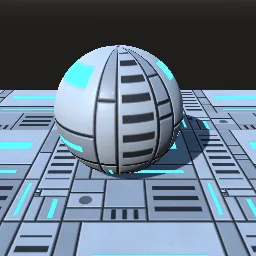
Generate tileable PBR maps of science fiction greeble panelling: recursive rectangle subdivision into panels at different levels, with grille slots, corner bolts, recessed ports and light strips in the emissive map. Use for spaceship interiors, corridors, machinery and mech parts.
procedural textures
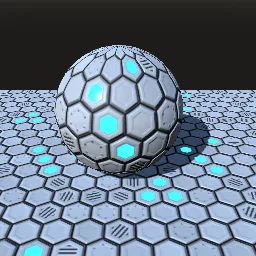
Generate tileable PBR maps of science fiction hull plating built from hexagonal panels: bevelled rims, inset plates, vents, bolts, panel lights and optionally glowing seams in the emissive map. Use for spaceships, armour, bases and game environments.
procedural textures
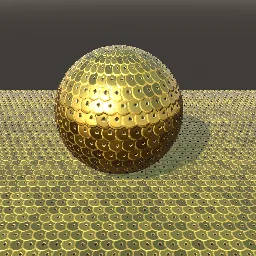
Generate tileable PBR maps of sequinned fabric: overlapping metallic discs in offset rows, each with its own tilt, a dished face and a centre hole, over the backing mesh, including holographic foil. Use for evening dresses, stage costumes, party props, bags and glam set dressing.
procedural textures
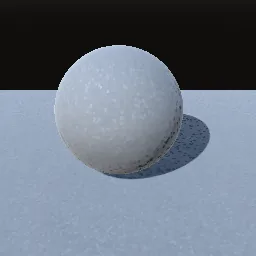
Generate tileable PBR maps of snow: soft drifts with sparkling glints, wind-carved sastrugi ridges, or old crusted snow with dirt and melt pits. Use for winter ground, roofs and mountains.
procedural textures
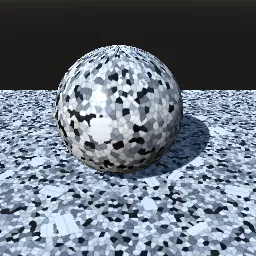
Generate tileable PBR maps of granite and similar crystalline stone: interlocking feldspar, quartz and dark mineral grains, optional large crystals, from polished to flamed. Use for counters, paving, cladding and monuments.
procedural textures
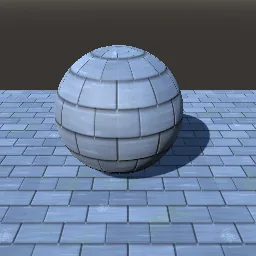
Generate tileable PBR maps of roof shingles in staggered overlapping rows: natural slate, asphalt with mineral granules or split cedar shakes, with square, round fish-scale or pointed butts, keyways, cast shadows under each butt, and weathering. Use for house roofs, towers, sheds and shingled walls.
procedural textures
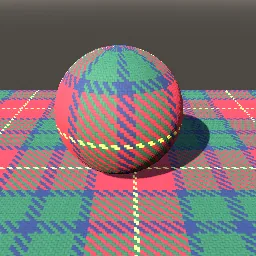
Generate tileable maps of tartan and plaid cloth from a sett: a reflected sequence of colours and thread counts used for warp and weft, woven in 2/2 twill so every crossing shows the warp or weft colour along diagonal lines. Use for kilts, scarves, blankets, flannel shirts and upholstery.
procedural textures
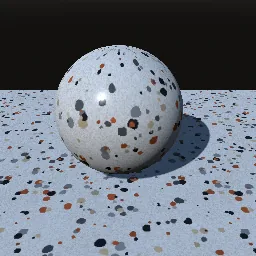
Generate tileable PBR maps of terrazzo: stone and glass chips of many sizes set in a cement matrix and polished flat. Use for floors, counters, stairs and wall panels.
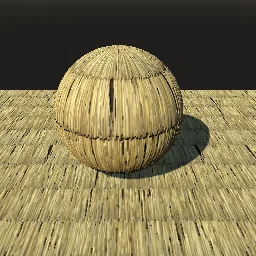
procedural textures
Generate tileable PBR maps of a thatched roof: overlapping courses of long straw laid down the slope or combed water reed showing its cut butts, with ragged course edges, weathering to grey and moss in the shelter of the courses. Use for cottage roofs, huts, barns and fantasy villages.
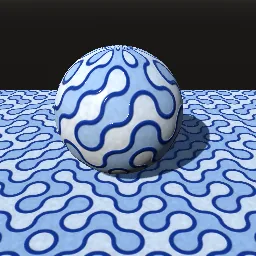
procedural textures
Generate tileable maps of Truchet tilings: quarter-circle arcs with a consistent two-colour fill, random diagonal mazes or half-square triangles, as raised glaze, printed lines, metal inlay or cement tiles. Use for decorative floors, wall tiles, inlaid furniture, wallpaper and game backgrounds.
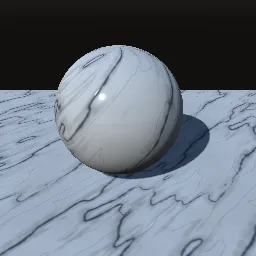
procedural textures
Generate tileable PBR maps of polished or honed marble with long branching veins, soft clouds and fine secondary veins. Use for floors, counters, wall cladding and sculpture bases.
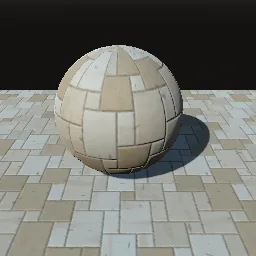
procedural textures
Generate tileable PBR maps of stone pavers in the Versailles (French) pattern: four sizes from an exact periodic module with no four-way joints and short straight joints, in tumbled travertine, walnut travertine, honed limestone or multicolour slate. Use for patios, terraces, pool decks and interior stone floors.
procedural textures
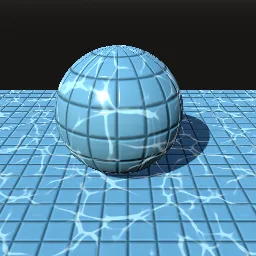
Generate tileable maps of caustic light focused by a wavy water surface onto a floor: rays refracted through a periodic surface are splatted onto pool tiles, rippled sand, rock or a grey card, and the emissive map holds the light. Use for pools, shallow seas, aquariums and as a projected light cookie.
procedural textures
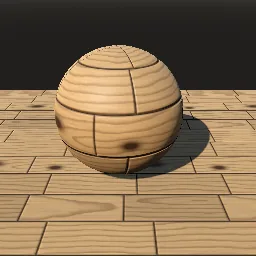
Generate tileable PBR maps of wood floor or deck boards with staggered joints, growth-ring grain that forms cathedral arches, knots and per-board tone. Use for floors, decks, walls and furniture panels.
procedural textures
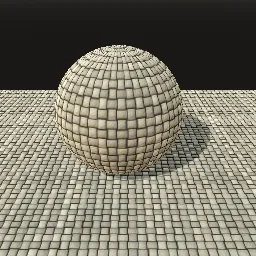
Generate tileable PBR maps of woven fabric from a weave draft: plain, 2/2 and 3/1 twill, 4/1 satin, basket or herringbone, with round threads, twist, fuzz, slubs and gaps. Use for clothing, upholstery, sacks, canvas and banners.
procedural textures
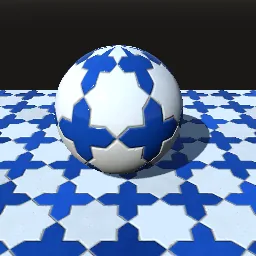
Generate tileable PBR maps of the eight-point star and cross tessellation in handmade zellige: stars and pointed crosses with grout, steep chipped cut edges, uneven glossy glaze with pinholes and per-piece colour. Use for Moroccan and Andalusian walls, fountains, floors and backsplashes.
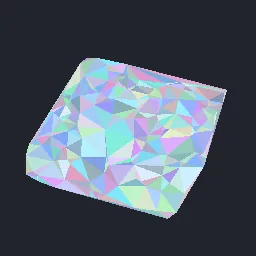
mesh algorithms
Triangulate 2D points so that no point lies inside any triangle's circumcircle, using Bowyer-Watson insertion with exact fallback predicates. Use it for terrain meshes, interpolation and Voronoi construction.
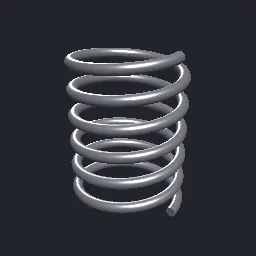
mesh algorithms
Sweep a round wire along a helix with exact rotation-minimizing frames and flat end caps, giving a closed spring mesh. Use it for mechanical props, suspension parts and coiled cables.

mesh algorithms
Grow or shrink a simple 2D polygon by a distance with miter, round or bevel joins, refusing offsets that would make it cross itself. Use it for outlines, margins, toolpaths and walls from floor plans.
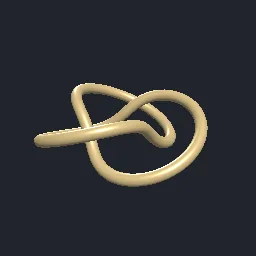
mesh algorithms
Sweep a circle along a (p, q) torus knot with parallel-transport frames closed by an even twist, so the closed tube has no twist seam. Use it for knot sculpture, jewellery and decorative pipes.
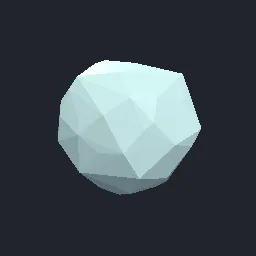
mesh algorithms
Compute the convex hull of 3D points as a closed mesh with outward faces, merging coplanar triangles into polygons. Use it for collision shapes, bounding volumes and faceted gem forms.
mesh algorithms
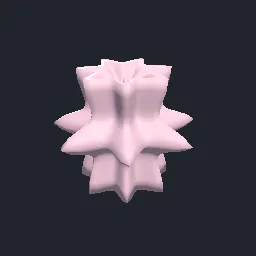
Generate star, flower, shell and crystal solids from two Gielis superformula curves combined as a spherical product. Use it for organic props, alien plants and procedural gems.
mesh algorithms
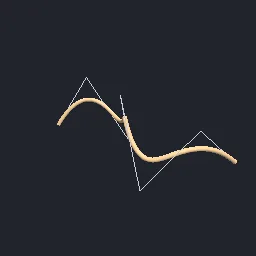
Evaluate clamped and periodic B-spline curves of any degree with de Boor's algorithm, compute Cox-de Boor basis functions and insert knots without changing the curve. Use it for smooth paths, animation curves and CAD-style editing.
mesh algorithms
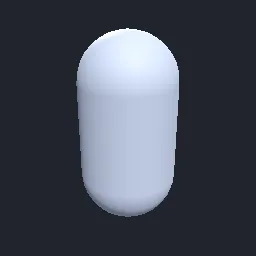
Build a capsule (a cylinder capped by two hemispheres) along Y with unit normals and UVs that follow the profile length. Use it for character colliders, pills and rounded rods.
mesh algorithms
Smooth a polygon cage into a quad mesh by Catmull-Clark subdivision, with B-spline boundary rules and fixed boundary corners. Use it to turn low-poly blockouts into smooth organic shapes.
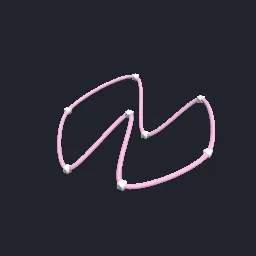
mesh algorithms
Interpolate a curve through control points with uniform, centripetal or chordal Catmull-Rom parameterization, open or closed. Use it for paths through waypoints, camera rails and track layouts.
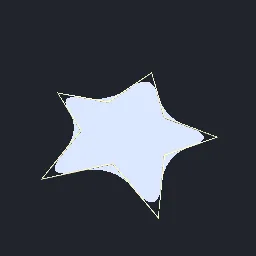
mesh algorithms
Round polygons and polylines by repeated corner cutting at the quarter points, converging to the quadratic B-spline. Use it for smooth outlines, organic 2D shapes and softening hand-drawn strokes.
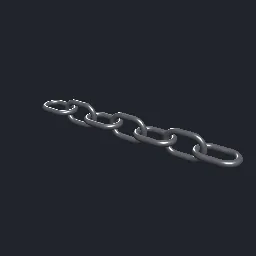
mesh algorithms
Build a chain of oval (stadium) wire links that hook through each other, as one link mesh instanced by glTF nodes at alternating 90 degree angles. Use it for props, rigging and anchors.
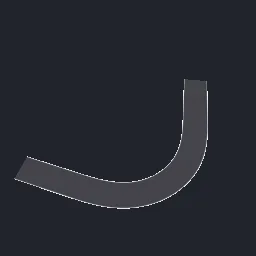
mesh algorithms
Lay out a road bend from a straight, a clothoid (Euler spiral) easing into a circular arc and a clothoid back, with exact Fresnel-series geometry and a coloured ribbon. Use it for roads, tracks and rails.
mesh algorithms
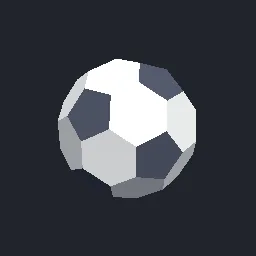
Build polyhedra from Conway notation: dual, ambo, kis, truncate, join, expand, ortho, gyro and snub applied to T, C, O, D, I, prisms and antiprisms, with planarizing relaxation. Use it for geodesic forms and gems.
mesh algorithms
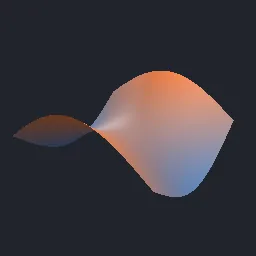
Fill the space between four boundary curves with a bilinearly blended Coons surface, from functions or polylines. Use it for terrain fills, cloth panels, car body patches and quick lofts.
mesh algorithms
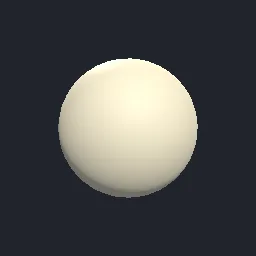
Map the six faces of a subdivided cube onto a sphere as one welded quad mesh, with a polynomial mapping that keeps cell areas within about 16 percent. Use it for planets and cube-map spheres.
mesh algorithms
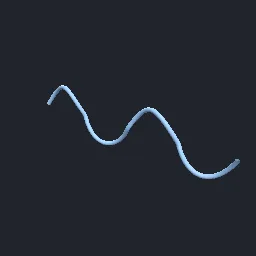
Evaluate and split cubic Bezier curves by de Casteljau, measure arc length by Gauss-Legendre quadrature and resample paths at even arc-length spacing. Use it for camera paths, motion along curves and even spacing of instances.
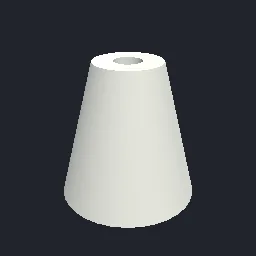
mesh algorithms
Generate straight solids of revolution: cylinders, cones, truncated cones and bored pipes, with flat-shaded caps and UVs. Use it for columns, cups, nozzles, pipes and lamp shades.
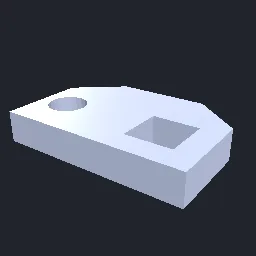
mesh algorithms
Extrude a 2D polygon with any number of holes into a closed solid with optional taper, triangulating the caps with bridged holes. Use it for plates, signs, floor plans, gaskets and logos.
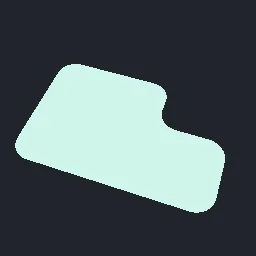
mesh algorithms
Round the corners of a 2D polygon or polyline with circular arcs tangent to both edges, shrinking the radius where edges are too short. Use it for rounded outlines, toolpaths and soft UI shapes.
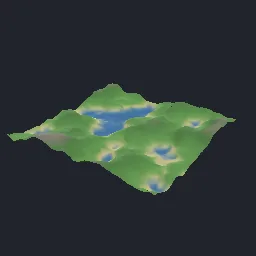
mesh algorithms
Generate a square terrain mesh from seeded fractal gradient noise, with central-difference normals, UVs and colours banded by height and slope. Use it for game ground, backdrops and test terrain.
mesh algorithms
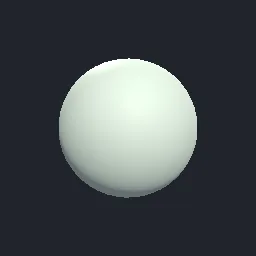
Build an evenly tessellated sphere by splitting a regular icosahedron into four triangles per face and projecting onto the sphere. Use it for physics bodies, planets and smooth balls.
mesh algorithms
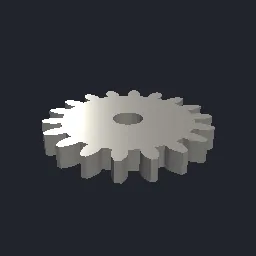
Generate a spur gear whose tooth flanks are true involutes of the base circle, sized by module, tooth count and pressure angle, extruded around a bore. Use it for mechanisms, clocks and props.
mesh algorithms
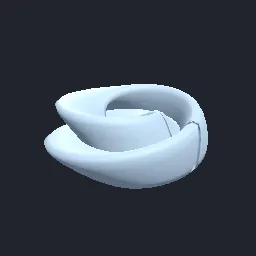
Build the figure-eight immersion of the Klein bottle: a closed, one-sided surface with no edge and Euler characteristic 0. Use it for mathematical sculpture and to test non-orientable meshes.
mesh algorithms
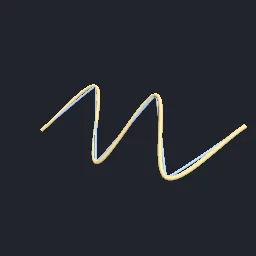
Interpolate keys with cubic Hermite segments whose tangents are shaped by tension, continuity and bias, as in animation key editors. Use it for motion paths and value curves with overshoot or sharp keys.
mesh algorithms
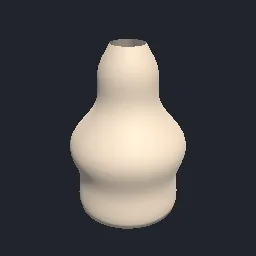
Revolve an (r, y) profile around the Y axis, fully or through a partial angle with flat cut faces, and compute the exact volume of the polygonal solid. Use it for vases, bowls, chess pieces and turned parts.
mesh algorithms
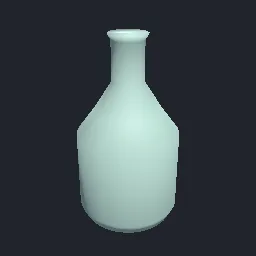
Skin a closed solid through a sequence of closed profiles, resampled to equal counts by arc length and aligned to avoid twisting, with capped ends. Use it for bottles, hulls, towers and organic forms.
mesh algorithms
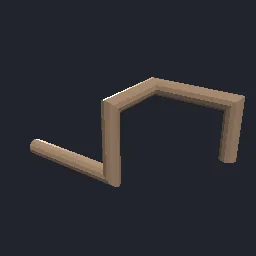
Run a constant polygon cross-section along a polyline with miter joints, so walls stay flat and the volume equals cross-section times centre-line length. Use it for ducts, plumbing, frames and wiring.
mesh algorithms
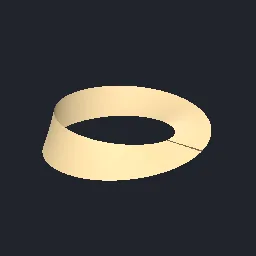
Build a band around a circle with any number of half twists: one gives a one-sided Moebius strip with a single edge, even counts give two-sided bands. Use it for sculpture, puzzles and topology tests.
mesh algorithms
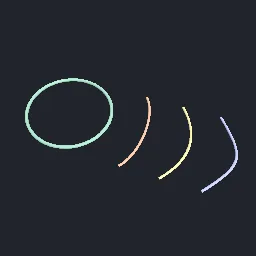
Evaluate rational B-spline (NURBS) curves in homogeneous coordinates, with the exact nine-point circle and single-span conic arcs. Use it where circles and arcs must be exact, as in CAD data.
mesh algorithms
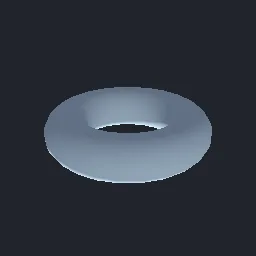
Evaluate and tessellate tensor-product NURBS surfaces, including exact spheres and tori built as surfaces of revolution from rational profiles. Use it for CAD-style surfaces and exact round shapes.
mesh algorithms
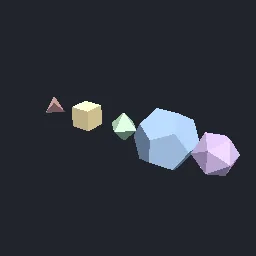
Generate the five regular convex polyhedra with exact coordinates and polygon faces found as supporting planes. Use them for dice, crystals, teaching models and as seeds for other operators.
mesh algorithms
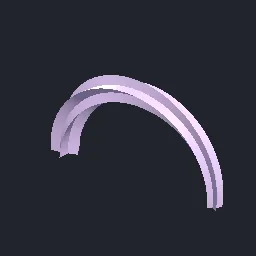
Sweep a closed 2D profile along a 3D path with transported frames, linear scaling and twist, and cap both ends into a closed solid. Use it for mouldings, horns, handles, tentacles and extruded paths.
mesh algorithms
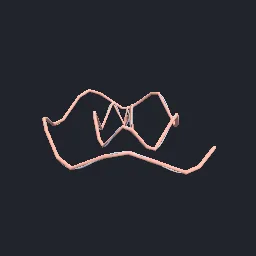
Simplify 2D or 3D polylines by keeping only points farther than a tolerance from the simplified line, with a measure of the largest deviation. Use it for GPS tracks, contours, strokes and paths.

mesh algorithms
Compute twist-free frames along a sampled curve with the double reflection method, compare them with Frenet frames and close loops without a jump. Use it for sweeps, ribbons, rails and camera roll.
mesh algorithms
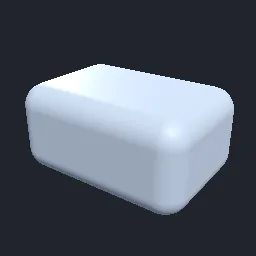
Build a box whose edges and corners are rounded to one radius as a single welded quad mesh, with the exact smooth volume available. Use it for furniture, devices, buttons and soft props.
mesh algorithms
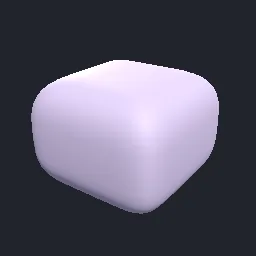
Generate Barr superquadric solids whose two exponents morph between boxes, cylinders, ellipsoids, diamonds and pinched stars, with the exact smooth volume available. Use it for rounded props and shape fitting.
mesh algorithms
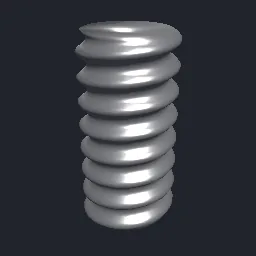
Generate a closed threaded rod whose radius follows a trapezoidal thread profile along a helix, with flat crest and root. Use it for bolts, screws, jar necks and lead screws.
mesh algorithms
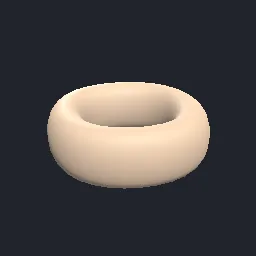
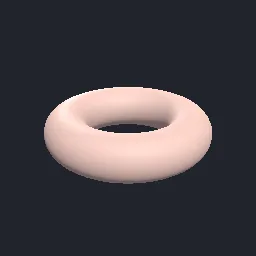
Build a ring torus around the Y axis with unit normals and a texture grid that wraps in both directions. Use it for rings, donuts, tyres and as a genus-one test surface.
mesh algorithms
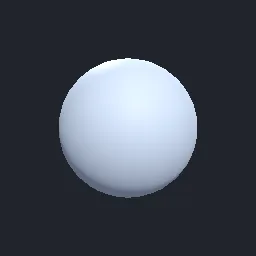
Build a latitude and longitude sphere with unit normals, a texture seam and one pole vertex per segment. Use it for globes, planets and any sphere that takes an equirectangular texture.
blender tools
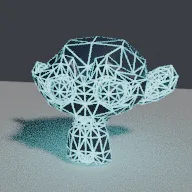
Build a material that renders every polygon edge as a glowing line over a base surface, with the line width in pixels or metres and an optional fade on surfaces seen edge-on. Use it for technical renders, topology presentations, sci-fi looks and blueprint styles.
blender tools
Build a physical sky world and a sun lamp whose direction matches the sky's sun exactly, from one elevation and compass bearing, with the sky's sun disc off so the lamp gives sharp direct light. Use it for exteriors, architecture and time-of-day studies.
blender tools
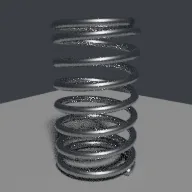
Generate a compression spring as a round wire swept along a helix with closed end coils, and report its free length, solid length and spring rate from the wire material. Use it for mechanisms, suspension props and machine details.
blender tools
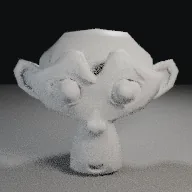
Add key, fill and rim area lights aimed at a target, placed by azimuth and elevation, with fill and rim powers derived from illuminance ratios at their distances. Use it to light a subject for product, character or turntable renders.
blender tools
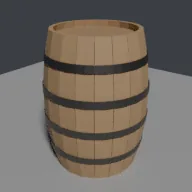
Generate a cooper-style barrel: separate bulged staves with gaps, iron hoops that follow the bilge and recessed head discs, each a closed solid with its own material slot, plus the outer volume in litres. Use it for taverns, cellars, ships and game props.
blender tools
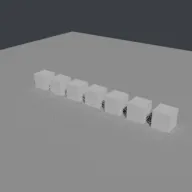
Rename many objects at once by rule: strip .001 suffixes, find and replace with optional regular expressions, apply a case style, add a prefix and suffix, and number only the names that would collide. Use it to prepare scenes for export and naming conventions.
blender tools
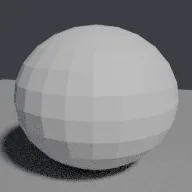
Key a bouncing motion on the active object from drop height, restitution and gravity: exact parabolic arcs, decaying rebounds, constant travel and optional squash at contacts. Use it for balls, props and motion tests.
blender tools
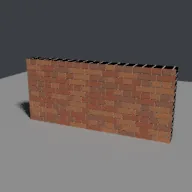
Generate a brick wall course by course in stretcher, stack, English, Flemish or common bond, with mortar joints, cut bricks at the ends, queen closers and seeded colour variation. Use it for architecture, ruins and game environments that need real brick geometry.
blender tools
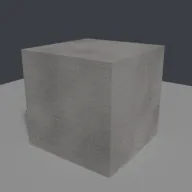
Build a concrete node material with water stains, aggregate specks from Voronoi cells, darkened and recessed air pores, and optional seams from board formwork every board width. Use it for brutalist architecture, floors, bunkers and urban scenes.
blender tools
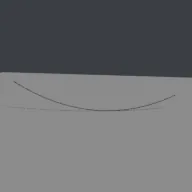
Hang a cable between two anchor points as an exact catenary for a given slack, swept as a round tube, and report the sag, the lowest point and the tension ratio at the anchors. Use it for power lines, ropes, hoses and hanging wires.
blender tools
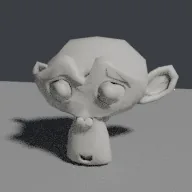
Build a grime node material where dirt collects in crevices found by ambient occlusion and runs down in vertical streaks from a noise stretched along Z, darkening and roughening a base colour. Use it for buildings, statues, machinery and props that need dirt in the right places.
blender tools
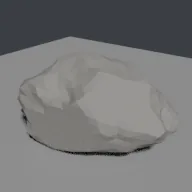
Generate a closed rock mesh from a seed: an icosphere displaced by fractal value noise, sheared by random planes into flat facets and flattened at the base. Use it for props, scatter sources and level dressing.
blender tools
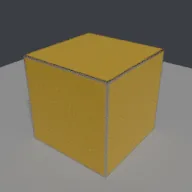
Build a painted-metal node material that wears through to bare metal along convex edges: the Bevel node normal is compared with the true normal, and the edge term is broken up by noise into chips. Use it for tools, vehicles, props and game assets that need handled edges.
blender tools
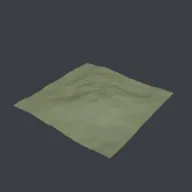
Generate a grid terrain from fractal gradient noise with ridged mode, island falloff, terraces, sea-level flattening and an optional closed base, plus a vertex group for the sea floor. Use it for landscapes, game maps, dioramas and printable relief models.
blender tools
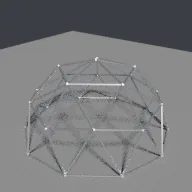
Generate a geodesic dome of any frequency from a vertex-up icosahedron, as hexagonal struts with hubs or as a closed panel shell, and list the distinct strut lengths with counts and chord factors. Use it for domes, greenhouses, sci-fi habitats and build planning.
blender tools
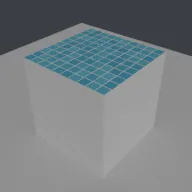
Build a square tile node material from math nodes: grout lines, rounded tile edges by bump, a glossy glaze whose colour varies per tile from a cell hash, and rough grout. Use it for kitchens, bathrooms, pools and floors.
blender tools
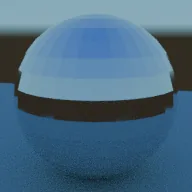
Build an image-based lighting world from an equirectangular image with rotation, strength and saturation, and optionally show the camera a solid colour while the image still lights the scene and fills reflections. Use it for product shots, look development and outdoor lighting.
blender tools
Add a box of volumetric fog whose density falls off exponentially with height above its base and drifts in noise patches, with scattering colour and anisotropy, shown as bounds in the viewport. Use it for morning mist, valleys, dungeons and atmospheric depth.
blender tools
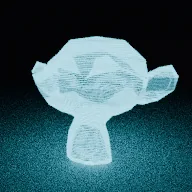
Build a see-through hologram material: thin glowing scanlines from world height, a bright Fresnel rim and noisy horizontal glitch bands, used both as emission strength and as the mix toward a transparent shader. Use it for sci-fi interfaces, projections and ghostly effects.
blender tools
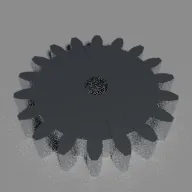
Generate a spur gear with true involute tooth flanks from module, tooth count and pressure angle, with backlash, face width and an optional bore, and report its pitch, tip, root and base diameters. Use it for mechanisms, gear trains and machine props that must mesh.
blender tools
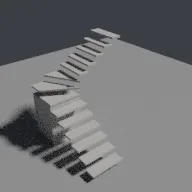
Generate quarter-turn stairs: two straight flights joined by a square landing or by three winder treads cut at 30 degree steps from the inner corner, turning left or right, with an optional support block. Use it where a stair must turn a corner.
blender tools
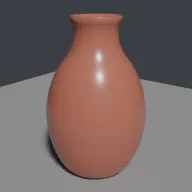
Revolve a list of radius and height points around Z into a solid of revolution, with poles on the axis, Chaikin rounding, partial sweeps and an optional wall thickness that turns an outline into a closed hollow vessel. Use it for vases, bottles, cups, lamps and turned parts.
blender tools
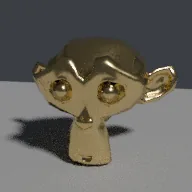
Build a fully metallic Principled material for gold, silver, copper, aluminium, iron, titanium, chromium, nickel, platinum, zinc, brass or cobalt from a table of approximate normal-incidence reflectance values, with roughness variation and optional brushing. Use it for jewellery, hardware and props.
blender tools
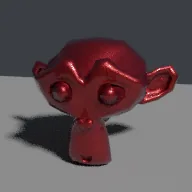
Build a car paint node material: a two-tone colour that flips at grazing angles, Voronoi metal flakes that tilt the base layer's normal so they sparkle, and a smooth clear coat on its own normal. Use it for vehicles, product renders and toys.
blender tools
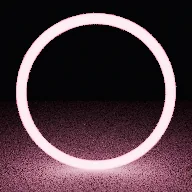
Build a neon sign material: an emissive gas core, whitened at the face-on centre, mixed by the Fresnel term with a clear glass sheath that takes over toward the silhouette. Use it for signs, cyberpunk scenes, bars and stylized lighting.
blender tools
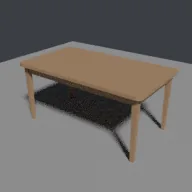
Generate a table from overall size: a top with rounded corners, four inset legs in tapered, round or turned style, and aprons under the top, each a closed solid. Use it for interiors, product scenes and furniture blockouts.
blender tools
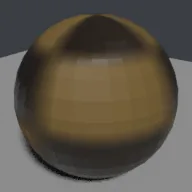
Build a full PBR material from a folder of texture maps by recognising each file from the words in its name: base colour, roughness or gloss, metallic, normal (OpenGL or DirectX), height, ambient occlusion, opacity and emission, with the right colour spaces. Use it to import texture sets fast.
blender tools
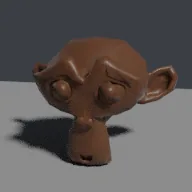
Build a leather node material from one Voronoi pattern read twice: distance to the cell edge for sunken creases and distance to the centre for domed pebbles, with darker rougher creases, tone noise and a light sheen. Use it for bags, shoes, seats, belts and book covers.
blender tools
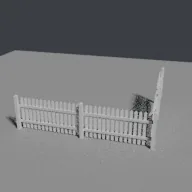
Build a picket fence that follows a path of ground points: capped posts at corners and at even bay spacing, two rails per bay following the ground slope, and evenly spaced pickets with pointed, flat, round or dog-ear tops. Use it for gardens, farms, suburbs and game levels.
blender tools
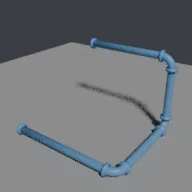
Sweep a pipe along a polyline of corner points, replacing every corner by a tangent elbow of a given bend radius, with a twist-free section and optional flanges at the ends and joints. Use it for plumbing, industrial plants, sci-fi corridors and cable conduits.
blender tools
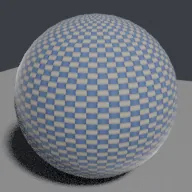
Build a woven cloth node material on UV coordinates: warp and weft threads that alternate over and under by cell parity, rounded thread profiles that drive bump and edge shading, two thread colours and Principled sheen. Use it for clothing, upholstery, flags and furniture.
blender tools
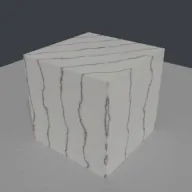
Build a node material for polished marble: thin veins from a noise-bent sine, soft clouding, a faint vein bump, slight subsurface and a clear coat, with vein count, width, direction and colours as parameters. Use it for floors, counters, statues and luxury interiors.
blender tools
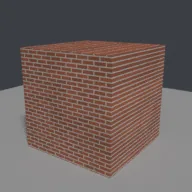
Build a brick node material whose brick width, course height and mortar joint are plain metres, oriented to a wall or floor plane, with two-colour brick variation, grime, rough mortar and raised bricks. Use it for walls and paving without texture files.
blender tools
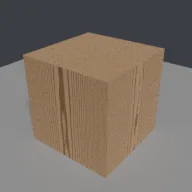
Build a node-based wood material whose growth rings, latewood share, warp, pores, roughness and bump are parameters, and assign it to the active mesh. Use it for furniture, floors and props without image textures.
blender tools
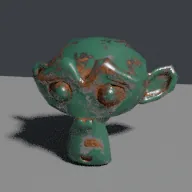
Build a painted steel node material that rusts in noise patches and in crevices found by ambient occlusion, with a thin ring of bare steel where the paint chips, and coverage, cavity weight and chip width as parameters. Use it for ships, machines, vehicles and post-industrial scenes.
blender tools
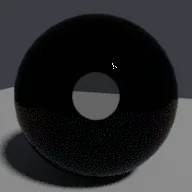
Build a soap bubble material: a reflective layer whose thin-film thickness grows from top to bottom like a draining film and swirls with noise, mixed over a transparent shader by Fresnel so the bubble is clear face on and iridescent at grazing angles. Use it for bubbles and iridescent films.
blender tools
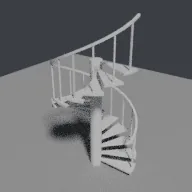
Generate a spiral staircase mesh with wedge treads, a central column, balusters and a helical handrail from rise, turn and radius parameters. Use it for towers, lofts and level blockouts.
blender tools
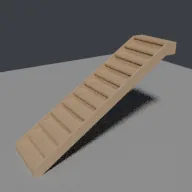
Generate a straight stair flight from rise, going and step count: treads with nosing, optional risers and sloped stringers cut at the floor, plus a report of pitch and the 2R + G step formula. Use it for buildings, decks and level blockouts.
blender tools
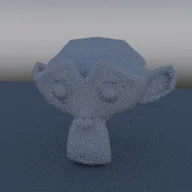
Build a world that blends ground, horizon and zenith colours by the elevation of the view direction, with an adjustable horizon height and band softness and a separate backdrop strength for the camera. Use it for clean studio renders and stylized skies.
blender tools
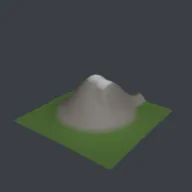
Build a landscape node material that puts rock on slopes steeper than a set angle, snow above a ragged world-height line but only where the ground is flat enough, and grass elsewhere, all in world space. Use it on terrains, mountains and dioramas.
blender tools
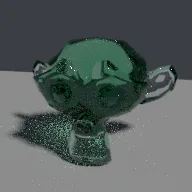
Build a glass material whose colour deepens with thickness: the tint is given as transmittance at a reference thickness and converted to exact Volume Absorption density and colour, under a clear transmissive surface. Use it for bottles, stained glass, gems and liquids.
blender tools
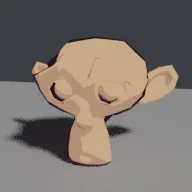
Build a cel-style material whose flat colour bands come from a half-Lambert term against a light direction given as a parameter, with an ink rim from the facing angle, emitted so it looks the same in Cycles, EEVEE and the viewport. Use it for stylized characters, props and illustrations.
blender tools
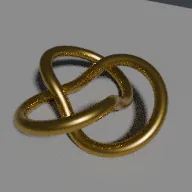
Generate a closed tube along a (p, q) torus knot, with section frames carried by parallel transport and the leftover twist spread evenly so the tube closes without a seam, plus the curve length and crossing number. Use it for jewellery, logos, abstract art and math visuals.
blender tools
Build an image material that needs no UV map: object coordinates scaled to a texture size in metres feed an Image Texture in box projection with a soft blend, using a given image or a generated UV grid. Use it for scanned or generated meshes, kitbash parts and blockouts.
geometry 4d
Generate the 600-cell as the 120 icosians (closure of two unit quaternions), find its faces and cells as cliques, split it into 12 Hopf decagons and 5 inscribed 24-cells by cosets, and write a glTF with the decagons as coloured tubes.
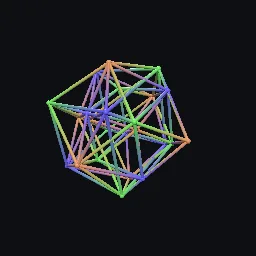
geometry 4d
Generate the 24-cell as the binary tetrahedral group (closure of two unit quaternions), split it into three inscribed 16-cells by coset, check self-duality, and write a coset-coloured wireframe glTF or a polytope JSON record.
geometry 4d
Turn plane rates into a rotation with a closed-form matrix exponential, recover the two invariant plane angles and the generator of any 4D rotation, classify it (simple, isoclinic, double), interpolate along SO(4) geodesics, and write a looping rotation glTF.
geometry 4d
Sample unit quaternions three ways (normalized Gaussians, a Hopf fibration grid, a super-Fibonacci spiral), measure separation, covering radius and cap discrepancy against the exact cap volume of S3, and write the stereographic image as a glTF point cloud.
geometry 4d
Build the 120-cell from its coordinate rule (even permutations included), take its dodecahedral cells from the icosian directions, split its vertices into five inscribed 600-cells, and write a glTF of two linked rings of ten cells plus all edges.
geometry 4d
Build the 16-cell exactly from signed coordinate axes (cells are the 16 sign vectors), check its cocktail party edge graph and its duality with the tesseract, and write exploded cells, a wireframe glTF or a polytope JSON record.
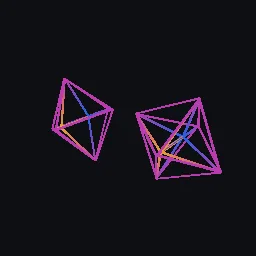
geometry 4d
Compose a 4D rotation from a left and a right unit quaternion, decompose any rotation matrix back into its pair, read its plane angles and kind (left or right isoclinic, simple, double), interpolate along geodesics with double slerp, and write left and right isoclinic loops of the 16-cell as glTF.
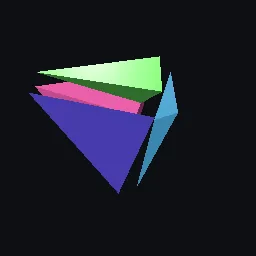
geometry 4d
Place the regular 4-simplex in 4D through the Helmert basis, with barycentric coordinates, uniform interior sampling and a permutation symmetry check, and write exploded cells, a wireframe glTF or a polytope JSON record.
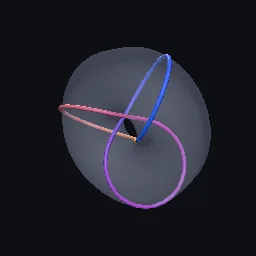
geometry 4d
A 4D geometric algebra: geometric and outer products, reversion, rotors exp(-B/2), the split of any bivector into two commuting simple parts, reflections, and the torus knot a double rotation traces, written as a glTF tube on the Clifford torus.
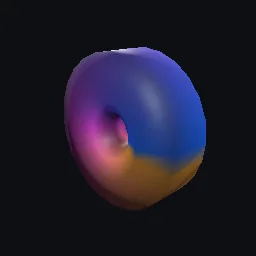
geometry 4d
Parametrize the flat Clifford torus in S3, check its flat metric, area 2 pi^2, the two solid tori of volume pi^2 it bounds and its linked core circles, and write its stereographic image turning in 4D as a looping glTF morph animation.
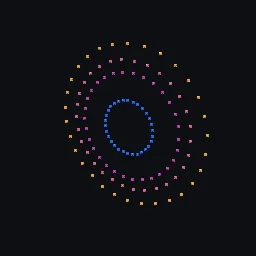
geometry 4d
Find the plane in which the Coxeter element of A4, B4, F4 or H4 turns by 2 pi/h and project a regular or Wythoff 4-polytope onto it, giving the h-fold symmetric drawing with its concentric rings, written as SVG or as a flat glTF.
geometry 4d
Compute the duocylinder's hypervolume, boundary 3-volume and ridge torus area, confirm them by integrating axis and diagonal slices, and write the diagonal slice sweep (stretched Steinmetz bicylinders) as an exact four-strip glTF morph animation.
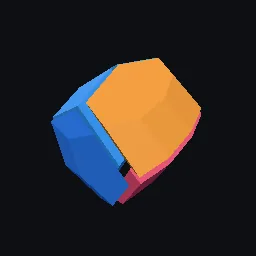
geometry 4d
Build any {p}x{q} duoprism exactly (pq vertices, two rings of prisms), with unit-edge or equal radii, check its counts and volume against the product formulas, and write exploded prisms, a wireframe glTF or a polytope JSON record.

geometry 4d
Sweep a hyperplane through the 5-cell, tesseract, 16-cell or 24-cell and write one glTF mesh whose morph-target animation plays the exact sequence of 3D cross-sections (for example tetrahedron, truncated tetrahedron, octahedron).
geometry 4d
Lift base points of S2 to their Hopf fibres in S3, project them stereographically into linked circles, check the fibration's properties (great circles, Clifford parallels, linking number 1, tori over latitude circles), and write tubes plus a colour-matched base sphere as glTF.
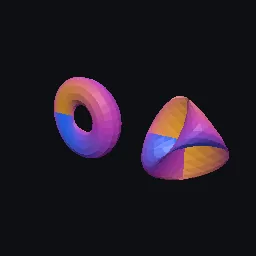
geometry 4d
Build the Klein bottle and the real projective plane (Veronese surface) as embedded surfaces of R4, prove non-orientability and Euler characteristics on their meshes, show their 3D shadows cross themselves (Steiner's Roman surface), and write both shadows coloured by the fourth coordinate.
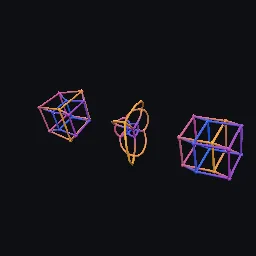
geometry 4d
Project one rotated 4D polytope three ways side by side (stereographic edges as true circular arcs) and measure what each map keeps: straight lines, circles, parallels and angles. Reads built-in polytopes or any fourd_polytope/v1 JSON record.
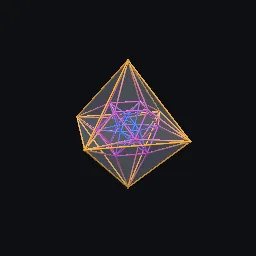
geometry 4d
Project a convex 4-polytope from a point just outside one cell onto that cell, so all other cells nest inside it, and write the diagram as a glTF wireframe with the outer cell as a translucent shell. Built-in regular polytopes or any polytope JSON record.
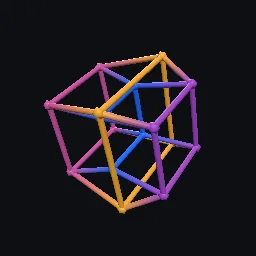
geometry 4d
Build the tesseract exactly (edges, square faces and cubic cells from bit patterns), rotate it in any of the six planes and write a projected wireframe glTF or a polytope JSON record. Also gives its Gray code cycle and inscribed 16-cells.
geometry 4d
Generate the uniform polytope of a Coxeter group (A4, B4, D4, F4, H4) and a ringed diagram with unit edges: vertices, edges, faces, cells and cell types, written as exploded cells coloured by cell type, a wireframe glTF or a polytope JSON record.
godot components
Follow a target with a Camera2D that ignores motion inside a dead zone, leads in the direction of travel by up to a set distance and eases toward its goal with exponential smoothing.
godot components
Move a CharacterBody2D like a platformer hero: jump height and time to apex set gravity, early release cuts the jump, coyote time and a jump buffer forgive late and early presses, and ground and air acceleration differ.
godot components
Decide what a 2D agent sees (range, view cone, peripheral sense, optional occlusion check) and hears (radius times loudness), and remember targets with last known positions until a memory time runs out.
godot components
Fly a Node3D like a glider: a sink-rate polar with a best glide speed, speed traded against height, banked turns at the coordinated-turn rate, auto-levelling wings and a stall with nose drop and recovery.
godot components
Navigate in 2D with an artificial potential field: goals attract with constant force, obstacles repel inside an influence radius, forces are analytic gradients, and a walker reports whether it reached the goal or stalled in a local minimum.
godot components
Build behavior trees in code from sequences, selectors, a parallel, decorators (inverter, succeeder, repeater, cooldown), conditions, actions and waits, ticked with a shared blackboard and its own clock.
godot components
Simulate a 2D flock with separation, alignment and cohesion over neighbors found through a uniform spatial hash, with speed and force limits and optional wrapping bounds.
godot components
Dash at a fixed speed for a set time in a locked direction, spend and recharge charges one at a time, keep a fraction of the speed on exit and stay invulnerable for a window that can outlast the dash.
godot components
Load states and event transitions from a Dictionary or JSON file, with wildcard rows, named guards and named actions registered in code, validation that refuses malformed tables, and signals for taken and ignored events.
godot components
Run one active state at a time from child nodes, with ordered exit and enter calls, an optional transition table, queued requests and a bounded history. Use it for characters, menus, doors and game flow.
godot components
Drive a CharacterBody3D first-person player: mouse look with a pitch limit, walk, sprint and crouch speeds, jumping, head bob, and a crouch that refuses to stand up under a ceiling.
godot components
Lay out slots for line, column, wedge, circle and grid formations, rotate them to a leader's position and facing, and assign members to slots so that paths are short and do not cross.
godot components
Plan the cheapest sequence of actions from preconditions, effects and costs to reach a goal world state, with optional procedural checks and a bound on expanded states.
godot components
Build a Dijkstra flow field from one or more goal cells over a grid with terrain costs and walls, then read a direction per cell so any number of units can share one search.
godot components
Stamp influence with distance falloff onto a grid, spread it around walls with decay and momentum, combine maps (friend minus foe) and query the strongest or weakest cell near a point.
godot components
Move a Node2D one grid cell at a time with an eased step, one buffered move, an optional blocked-cell check and signals for start, finish and bump. Use it for roguelikes, puzzles and classic tile RPGs.
godot components
Center a Camera2D on several targets and zoom so all of them fit with a margin, within zoom limits and with smoothing, for local multiplayer and boss fights.
godot components
Compute hex grid distance, neighbors, rings, spirals, lines, rotations, pixel conversion for pointy-top and flat-top layouts, reachable areas and A* paths, all as static functions on Vector2i axial coordinates.
godot components
Define nested states in code with event transitions that bubble from the leaf to its ancestors, guards, entry and exit in hierarchy order and shallow history, so shared behavior lives in parent states.
godot components
Add knockback from hits divided by weight, fade it with exponential friction, and stun in proportion to the hit strength with a cap, so heavy enemies barely move and light ones fly.
godot components
Find grabbable ledges with chest and head rays plus a downward ray for the top, hang from the corner, climb up along an up-then-forward path over a set time, or drop with a regrab cooldown.
godot components
Steer a 2D agent around circle obstacles with a detection corridor ahead of it: find the closest threat, push sideways away from it and brake, harder when closer, with a repeatable choice for dead-ahead obstacles.
godot components
Keep a 2D agent inside a polyline corridor with predictive path following, and query the path: length, closest point, point at a distance and progress along it, for open and closed paths.
godot components
Float a RigidBody3D on water from probe points: depth-proportional upward force per probe, travelling sine waves for the surface height, water drag and signals for entering and leaving the water.
godot components
Keep a stack of state objects where only the top runs: pushing pauses the state below, popping resumes it, replace swaps the top, and pop_to unwinds several levels. Use it for pause menus and nested screens.
godot components
Move a Camera3D along a Path3D rail to the point closest to its target, with an optional lead, clamping at the rail ends, smooth travel and a constant look at the target.
godot components
Drive a RigidBody3D on raycast wheels: spring-damper suspension per wheel, drive force on driven wheels, steering on front wheels, lateral grip and rolling resistance, with a ride height independent of mass.
godot components
Keep a 2D camera inside the room that contains the target, center it in rooms smaller than the view, and ease across with smoothstep when the target enters another room.
godot components
Check and adjust shot composition: rule-of-thirds points and offsets, action and title safe areas, lead room in front of a subject, screen bounds of 3D points through a Camera3D, and screen coverage.
godot components
Store items in a fixed number of slots with per-item stack limits and an optional total weight limit. Add returns what did not fit; remove, move, merge, swap, split and save to JSON-friendly data with validation.
godot components
Compute view rectangles for one to many local players (halves, one wide plus two, grids with full-width last rows), with gaps between views, and place Control nodes such as SubViewportContainers on them.
godot components
Compute Reynolds-style steering forces for 2D agents (seek, flee with a panic distance, arrive with a slowing radius, pursue and evade with prediction, seeded wander) and integrate a point mass with force and speed limits.
godot components
Orbit a Camera3D around a target with yaw, pitch and zoom limits, smooth distance changes and a ray that pulls the camera in front of walls so the target stays visible.
godot components
Track threat per attacker for an enemy, decay it over time, force the target with taunts, and change targets only when another attacker passes the current one by a margin.
godot components
Move a CharacterBody2D in eight directions with acceleration, friction, a reversal boost, optional d-pad snapping and a facing sector index for animation.
godot components
Shake a Camera2D from a decaying trauma value: the shake is trauma to a power, and smooth seeded noise moves the offset and roll within set limits. The camera returns to its original offset and rotation when the shake ends.
godot components
Score named actions from considerations mapped through response curves (linear, polynomial, logistic, step, smoothstep) with compensated products, vetoes, weights and hysteresis, and pick the best action.
godot components
Cap the fall speed while a character presses into a wall, jump away from walls with a push, allow a short wall coyote time and lock input toward the wall briefly after the jump.
godot components
Move an AnimatableBody2D through waypoint offsets at an exact speed, wait at each point, loop or ping-pong, and carry CharacterBody2D riders through the physics engine's platform sync.
asset contracts
Catch exports that keep every mesh but lose animation: only the playing action exported, clips merged, channels without targets, clips baked to one pose or over the whole scene range. Ships the Blender scripts that declare a scene's clips and put every action on its own NLA track.
asset contracts
Catch exports that keep every mesh but lose what joints need: parts joined into their parent, origins moved off the hinge, node frames rotated, hierarchies flattened, and joint records in custom properties left out by a default export.
asset contracts
Give a glTF asset working hinges and sliders: a manifest binds joints (axis, pivot, limits) to named nodes, a checker validates the binding and predicts poses at the limits, and a Godot 4 node applies it at run time with clamping, clips and a saved scene.
asset contracts
Declare what a 3D asset must be before it is modelled: parts with parents, dimensions, centres, pivots and materials; joints with axes and limits; clips and behaviors. Validate a specification and generate a placeholder glTF that realises it.
asset contracts
Diagnose a glTF that is Z-up, mirrored or in the wrong unit (checked against expected dimensions and triangle winding) and convert it between up axes, handedness, front-face winding and units, transforming nodes, meshes, skins and animations.
asset contracts
Check that a .gltf or .glb file is internally consistent before an engine loads it: buffers, views, accessors, indices, materials, textures, the node graph, skins and animation samplers. Run it after every export and before every import.
asset contracts
Recover what an asset means from the file alone (named parts, hierarchy, real dimensions in metres, pivots, part materials, clips with durations) and compare it with a declared asset specification, naming the likely cause of each mismatch.
asset contracts
Parse Godot 4 text scenes and resources and find what fails or silently vanishes on load: missing resource files, unknown or forward resource ids, missing node parents, repeated sibling names, untyped nodes, broken connections, several roots, syntax and format errors.