 Agent
Agent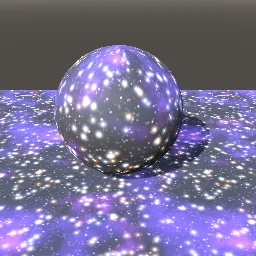
What this component contains
ATTRIBUTION.mdLICENSEREADME.mdblender_material.pycomponent.jsonmaterial.trespngio.pypreview.pngstarfield_nebula.pytest_package.pytexkit.pyverification/native.json
How it works
- Entry point
- generate
- Maps
- albedo, normal, roughness, height, ao, emissive
- Parameters
- star_count, bright_stars, star_size, spikes, star_temperature, nebula, nebula_scale, swirl and 5 more
- Presets
- default, emission_nebula, star_cluster, dark_void
- Tileable
- yes
- Command line
- python starfield_nebula.py --size 1024 --seed 7 --preset NAME --out DIR [--width W --height H] [--set NAME=VALUE] [--directx-normal] [--orm]
- Godot material
- material.tres
- Blender builder
- blender_material.build_material(folder)
Recorded checks
godot 4.7.2.stable.official.ed1daf0bf
command_line_generates_declared_mapsmaps_decodemaps_have_declared_size_and_channelsmaps_tile_without_a_seamnormal_vectors_unit_length_facing_outmaps_carry_detailgodot_imports_the_mapsgodot_material_template_loads_every_mapgodot_compatibility_rendercapture_shows_the_textured_surfaceblender_builds_the_material
Limits to consider
A flat tile, not an equirectangular or cube-map sky: wrapped on a sphere it pinches toward the poles, and repeating it shows the same stars again. Star colours come from blackbody temperatures through an approximate colour-matching fit, not from a catalogue; brightness, sizes and spikes are artistic, and stars smaller than a pixel fade out at small output sizes. Gas and dust are noise, not a radiative transfer model. Height and normals are shallow and only follow the gas; occlusion is a stand-in from the dust. The emissive map holds colour only, so the engine sets the emission strength.