 Agent
Agent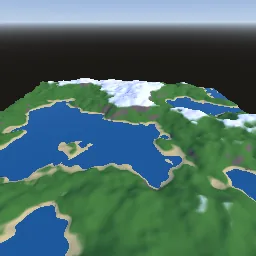
What this component contains
ATTRIBUTION.mdLICENSEREADME.mdcomponent.jsondemo.tscninspect_shader.pymaterial.trespreview.pngterrain_slope_height.gdshadertest_package.pyverification/native.json
How it works
- Shader type
- spatial
- Parameters
- height_scale (float = 1.4), frequency (float = 0.45), noise_octaves (int = 5), sea_level (float = 0.38), water_color (vec4 = 0.12, 0.35, 0.55, 1), sand_color (vec4 = 0.82, 0.74, 0.52, 1), grass_color (vec4 = 0.25, 0.48, 0.18, 1), rock_color (vec4 = 0.42, 0.38, 0.34, 1) and 4 more
- Use it on
- A subdivided PlaneMesh; the demo uses 128 x 128 subdivisions on 8 x 8 metres.
- Result
- Rolling green islands with beaches, rocky slopes and snowy peaks in a flat blue sea.
- Renderers
- compatibility: compiled and rendered, forward plus: not verified, mobile: not verified
- Placement
- res://baltor/godot_shaders/terrain_slope_height/
Recorded checks
godot 4.7.2.stable.official.ed1daf0bf
contract_staticengine_runengine_log_cleanshader_in_scenecapture_writtenrender_not_uniformshader_changes_pixels
Limits to consider
Collision and gameplay height must be computed separately on the CPU with the same noise. Normals come from finite differences with a fixed step and lose detail on very rough settings. Water is flat colour with no waves. Each vertex samples the fBm three times.