 Agent
Agent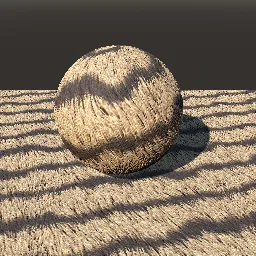
What this component contains
ATTRIBUTION.mdLICENSEREADME.mdblender_material.pycomponent.jsonfur_strands.pymaterial.trespngio.pypreview.pngtest_package.pytexkit.pyverification/native.json
How it works
- Entry point
- generate
- Maps
- albedo, normal, roughness, height, ao
- Parameters
- length, thickness, coverage, swirl, clumping, pattern, banding, gloss and 3 more
- Presets
- default, leopard_rosettes, black_glossy, white_fluffy, dalmatian_spots
- Tileable
- yes
- Command line
- python fur_strands.py --size 1024 --seed 7 --preset NAME --out DIR [--width W --height H] [--set NAME=VALUE] [--directx-normal] [--orm]
- Godot material
- material.tres
- Blender builder
- blender_material.build_material(folder)
Recorded checks
godot 4.7.2.stable.official.ed1daf0bf
command_line_generates_declared_mapsmaps_decodemaps_have_declared_size_and_channelsmaps_tile_without_a_seamnormal_vectors_unit_length_facing_outmaps_carry_detailgodot_imports_the_mapsgodot_material_template_loads_every_mapgodot_compatibility_rendercapture_shows_the_textured_surfaceblender_builds_the_material
Limits to consider
Fur is painted as flat strands in a height field, so it reads as fur lying flat seen from above; it is not hair geometry, cards or shells, and it has no silhouette fuzz, anisotropic hair shading or translucency. Strands are three straight segments each, so long fur looks combed rather than tangled. Coat patterns are stylized periodic fields (stripes, spots, rings), not species markings. Strands are drawn at least about a pixel wide, so the strand count drops at small sizes. Occlusion is a blurred-height estimate.