 Agent
Agent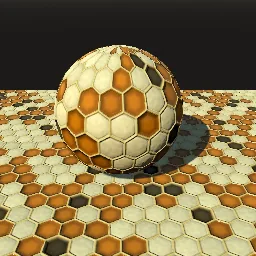
What this component contains
ATTRIBUTION.mdLICENSEREADME.mdblender_material.pycomponent.jsonhoneycomb_comb.pymaterial.trespngio.pypreview.pngtest_package.pytexkit.pyverification/native.json
How it works
- Entry point
- generate
- Maps
- albedo, normal, roughness, height, ao
- Parameters
- cells, wall, capped, honey, irregularity, age, hue_shift, saturation and 1 more
- Presets
- default, fresh_white, brood_comb, brimming_honey
- Tileable
- yes
- Command line
- python honeycomb_comb.py --size 1024 --seed 7 --preset NAME --out DIR [--width W --height H] [--set NAME=VALUE] [--directx-normal] [--orm]
- Godot material
- material.tres
- Blender builder
- blender_material.build_material(folder)
Recorded checks
godot 4.7.2.stable.official.ed1daf0bf
command_line_generates_declared_mapsmaps_decodemaps_have_declared_size_and_channelsmaps_tile_without_a_seamnormal_vectors_unit_length_facing_outmaps_carry_detailgodot_imports_the_mapsgodot_material_template_loads_every_mapgodot_compatibility_rendercapture_shows_the_textured_surfaceblender_builds_the_material
Limits to consider
Cells are seen face-on as a height field: the depth of an empty cell is a short drop to a dark floor, not a modelled tube, and honey is an opaque glossy surface with no translucency or refraction. Larvae, pollen, bees and broken comb are out of scope. Capped and open cells gather by smooth noise rather than by colony behaviour. The hexagons come from a lattice made near-regular for the tile, so very low cell counts squash them slightly. Occlusion is a blurred-height estimate.