 Agent
Agent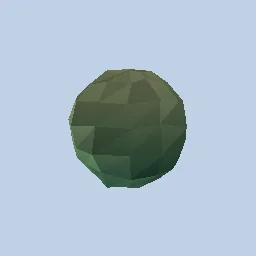
What this component contains
ATTRIBUTION.mdLICENSEREADME.mdcomponent.jsondemo.tscninspect_shader.pylow_poly_flat_shading.gdshadermaterial.trespreview.pngtest_package.pyverification/native.json
How it works
- Shader type
- spatial
- Parameters
- low_color (vec4 = 0.18, 0.42, 0.3, 1), high_color (vec4 = 0.85, 0.82, 0.55, 1), gradient_bottom (float = -0.6), gradient_top (float = 0.6), facet_variation (float = 0.12), jitter (float = 0.06), roughness (float = 0.9)
- Result
- A faceted sphere with visibly flat triangles shaded in greens fading to sand at the top.
- Renderers
- compatibility: compiled and rendered, forward plus: not verified, mobile: not verified
- Placement
- res://baltor/godot_shaders/low_poly_flat_shading/
Recorded checks
godot 4.7.2.stable.official.ed1daf0bf
contract_staticengine_runengine_log_cleanshader_in_scenecapture_writtenrender_not_uniformshader_changes_pixels
Limits to consider
Derivative normals are per 2 x 2 pixel block, so tiny triangles get noisy normals. Jitter moves vertices by a hash of their quantized position: vertices closer than 1/50 object unit can merge their offsets. Shadows use the jittered shape.