 Agent
Agent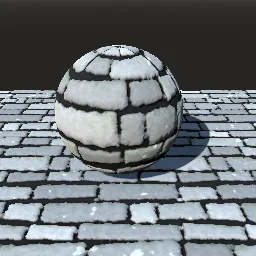
What this component contains
ATTRIBUTION.mdLICENSEREADME.mdblender_material.pycomponent.jsondry_stone_wall.pymaterial.trespngio.pypreview.pngtest_package.pytexkit.pyverification/native.json
How it works
- Entry point
- generate
- Maps
- albedo, normal, roughness, height, ao
- Parameters
- courses, stone_length, irregularity, tilt, gap, chinking, face_relief, moss and 5 more
- Presets
- default, gritstone_moss, slate_coursed, rubble_rough
- Tileable
- yes
- Command line
- python dry_stone_wall.py --size 1024 --seed 7 --preset NAME --out DIR [--width W --height H] [--set NAME=VALUE] [--directx-normal] [--orm]
- Godot material
- material.tres
- Blender builder
- blender_material.build_material(folder)
Recorded checks
godot 4.7.2.stable.official.ed1daf0bf
command_line_generates_declared_mapsmaps_decodemaps_have_declared_size_and_channelsmaps_tile_without_a_seamnormal_vectors_unit_length_facing_outmaps_carry_detailgodot_imports_the_mapsgodot_material_template_loads_every_mapgodot_compatibility_rendercapture_shows_the_textured_surfaceblender_builds_the_material
Limits to consider
Stones are rotated, tapered rounded rectangles with noisy outlines in rough courses; there are no through stones, coping, batter or stones that cross courses. Voids are drawn as flat dark recesses, and chinks are small ellipses. Lichen and moss are noise patches, not grown. Occlusion is a blurred-height estimate, not ray traced; deep voids read best with the height map for parallax or displacement.