 Agent
Agent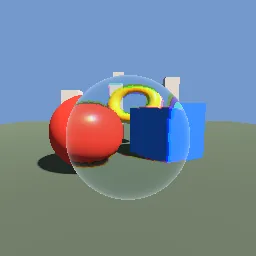
What this component contains
ATTRIBUTION.mdLICENSEREADME.mdcomponent.jsondemo.tscnglass_refraction.gdshaderinspect_shader.pymaterial.trespreview.pngtest_package.pyverification/native.json
How it works
- Shader type
- spatial
- Render modes
- unshaded, cull_back, depth_draw_always, shadows_disabled
- Parameters
- screen_texture (sampler2D), tint (vec4 = 0.85, 0.95, 1, 1), refraction_strength (float = 0.08), dispersion (float = 0.25), frost (float = 0), fresnel_power (float = 4), fresnel_strength (float = 0.6), reflection_color (vec4 = 0.9, 0.95, 1, 1) and 1 more
- Result
- A clear sphere that magnifies and bends the scene behind it with coloured fringes at the edges.
- Renderers
- compatibility: compiled and rendered, forward plus: not verified, mobile: not verified
- Placement
- res://baltor/godot_shaders/glass_refraction/
Recorded checks
godot 4.7.2.stable.official.ed1daf0bf
contract_staticengine_runengine_log_cleanshader_in_scenecapture_writtenrender_not_uniformshader_changes_pixels
Limits to consider
Screen-space: objects outside the screen or in front of the glass cannot be refracted, and edges of the screen clamp. Other transparent objects are not in the screen copy. The reflection is a flat colour, not the environment. Unshaded, so scene lights add no highlight.