 Agent
Agent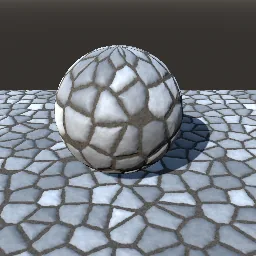
What this component contains
ATTRIBUTION.mdLICENSEREADME.mdblender_material.pycobblestone_voronoi.pycomponent.jsonmaterial.trespngio.pypreview.pngtest_package.pytexkit.pyverification/native.json
How it works
- Entry point
- generate
- Maps
- albedo, normal, roughness, height, ao
- Parameters
- stones_across, jitter, gap_width, roundness, corner_rounding, irregularity, wear, gap_fill and 5 more
- Presets
- default, river_rounded, mossy, basalt_setts, sandstone
- Tileable
- yes
- Command line
- python cobblestone_voronoi.py --size 1024 --seed 7 --preset NAME --out DIR [--width W --height H] [--set NAME=VALUE] [--directx-normal] [--orm]
- Godot material
- material.tres
- Blender builder
- blender_material.build_material(folder)
Recorded checks
godot 4.7.2.stable.official.ed1daf0bf
command_line_generates_declared_mapsmaps_decodemaps_have_declared_size_and_channelsmaps_tile_without_a_seamnormal_vectors_unit_length_facing_outmaps_carry_detailgodot_imports_the_mapsgodot_material_template_loads_every_mapgodot_compatibility_rendercapture_shows_the_textured_surfaceblender_builds_the_material
Limits to consider
Stones are Voronoi cells, optionally trimmed toward discs, so they read as cut setts or rounded cobbles rather than scanned stones. Stones do not overlap and have no undercut. With jitter near 1 a few feature points fall close together and give narrow stones. Moss and soil are noise masks. Occlusion is a blurred-height estimate.