 Agent
Agent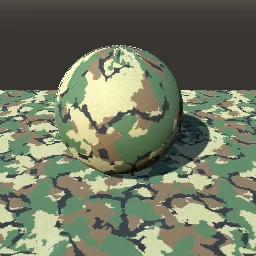
What this component contains
ATTRIBUTION.mdLICENSEREADME.mdblender_material.pycamouflage_patterns.pycomponent.jsonmaterial.trespngio.pypreview.pngtest_package.pytexkit.pyverification/native.json
How it works
- Entry point
- generate
- Maps
- albedo, normal, roughness, height, ao
- Parameters
- pattern, blobs, pixels_across, ragged, threads, weave, fading, hue_shift and 2 more
- Presets
- default, digital_pixels, tiger_stripe, desert_spots, splinter_rain
- Tileable
- yes
- Command line
- python camouflage_patterns.py --size 1024 --seed 7 --preset NAME --out DIR [--width W --height H] [--set NAME=VALUE] [--directx-normal] [--orm]
- Godot material
- material.tres
- Blender builder
- blender_material.build_material(folder)
Recorded checks
godot 4.7.2.stable.official.ed1daf0bf
command_line_generates_declared_mapsmaps_decodemaps_have_declared_size_and_channelsmaps_tile_without_a_seamnormal_vectors_unit_length_facing_outmaps_carry_detailgodot_imports_the_mapsgodot_material_template_loads_every_mapgodot_compatibility_rendercapture_shows_the_textured_surfaceblender_builds_the_material
Limits to consider
The five families are invented in the general style of their kind and do not reproduce any issued or trademarked pattern. Layer shapes come from noise fields cut at quantiles, so they are statistically, not exactly, like printed screens. The weave is a pair of diagonal sine ridges at a whole number of threads across the tile, not a modelled twill; it aliases below about three pixels per thread. Fading is a noise mask, not a wear simulation. Occlusion is a blurred-height estimate.