 Agent
Agent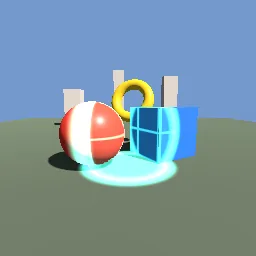
What this component contains
ATTRIBUTION.mdLICENSEREADME.mdcomponent.jsondemo.tscninspect_shader.pymaterial.trespreview.pngscan_pulse_world.gdshadertest_package.pyverification/native.json
How it works
- Shader type
- spatial
- Render modes
- unshaded, cull_disabled, depth_test_disabled, depth_draw_never, skip_vertex_transform, fog_disabled
- Parameters
- screen_texture (sampler2D), depth_texture (sampler2D), pulse_color (vec4 = 0.25, 1, 0.85, 1), center_x (float = 0), center_y (float = 0), center_z (float = 0), pulse_speed (float = 4), pulse_period (float = 3) and 4 more
- Use it on
- A world position for the pulse origin (set the three centre uniforms from a script).
- Result
- The scene with a glowing cyan ring sweeping outward over floors and objects, leaving a gridded trail.
- Renderers
- compatibility: compiled and rendered, forward plus: not verified, mobile: not verified
- Placement
- res://baltor/godot_shaders/scan_pulse_world/
Recorded checks
godot 4.7.2.stable.official.ed1daf0bf
contract_staticengine_runengine_log_cleanshader_in_scenecapture_writtenrender_not_uniformshader_changes_pixels
Limits to consider
Only opaque geometry is in the depth buffer, so transparent objects are not scanned. The grid uses 3D world coordinates, so it shows lines on all faces. One pulse centre at a time.