 Agent
Agent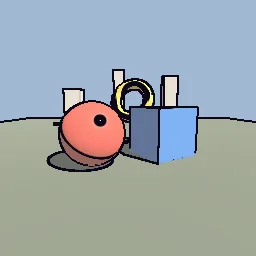
What this component contains
ATTRIBUTION.mdLICENSEREADME.mdcomponent.jsondemo.tscninspect_shader.pymaterial.trespost_edge_detect.gdshaderpreview.pngtest_package.pyverification/native.json
How it works
- Shader type
- spatial
- Render modes
- unshaded, cull_disabled, depth_test_disabled, depth_draw_never, skip_vertex_transform, fog_disabled
- Parameters
- screen_texture (sampler2D), depth_texture (sampler2D), line_color (vec4 = 0.05, 0.05, 0.08, 1), line_width (float = 1), depth_sensitivity (float = 8), color_sensitivity (float = 1.5), threshold (float = 0.3), paper_mix (float = 0) and 1 more
- Result
- The scene with dark lines along silhouettes, creases and colour borders, optionally faded toward paper.
- Renderers
- compatibility: compiled and rendered, forward plus: not verified, mobile: not verified
- Placement
- res://baltor/godot_shaders/post_edge_detect/
Recorded checks
godot 4.7.2.stable.official.ed1daf0bf
contract_staticengine_runengine_log_cleanshader_in_scenecapture_writtenrender_not_uniformshader_changes_pixels
Limits to consider
Lines are found in screen space, so their width is in pixels and does not scale with distance. Transparent objects are not in the depth buffer and only get colour edges. Very distant geometry can produce faint depth lines from precision. The pass sees only what is drawn before it; draw order relative to other transparent passes is not controlled.