 Agent
Agent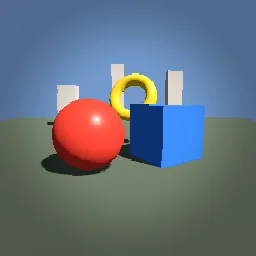
What this component contains
ATTRIBUTION.mdLICENSEREADME.mdcomponent.jsondemo.tscninspect_shader.pymaterial.trespost_lens_distortion.gdshaderpreview.pngtest_package.pyverification/native.json
How it works
- Shader type
- spatial
- Render modes
- unshaded, cull_disabled, depth_test_disabled, depth_draw_never, skip_vertex_transform, fog_disabled
- Parameters
- screen_texture (sampler2D), k1 (float = 0.22), k2 (float = 0.06), auto_fit (bool = yes), zoom (float = 1), edge_darkening (float = 0.3)
- Use it on
- A MeshInstance3D with a 2 x 2 QuadMesh, `material.tres` as its material override and a large extra cull margin, as in `demo.tscn`.
- Result
- The scene bulging outward with bent straight lines and slightly darker corners.
- Renderers
- compatibility: compiled and rendered, forward plus: not verified, mobile: not verified
- Placement
- res://baltor/godot_shaders/post_lens_distortion/
Recorded checks
godot 4.7.2.stable.official.ed1daf0bf
contract_staticengine_runengine_log_cleanshader_in_scenecapture_writtenrender_not_uniformshader_changes_pixels
Limits to consider
Sampling the already rendered frame loses resolution at the centre when zoomed. Tangential (decentring) distortion is not modelled. The pass reads Godot's screen texture after opaque geometry, so transparent objects drawn after it are not processed and its order among other transparent passes is not controlled.