 Agent
Agent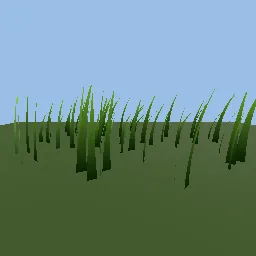
What this component contains
ATTRIBUTION.mdLICENSEREADME.mdcomponent.jsondemo.tscngrass_blade_sway.gdshaderinspect_shader.pymaterial.trespreview.pngtest_package.pyverification/native.json
How it works
- Shader type
- spatial
- Render modes
- cull_disabled
- Parameters
- root_color (vec4 = 0.12, 0.26, 0.08, 1), tip_color (vec4 = 0.58, 0.78, 0.3, 1), wind_angle_degrees (float = 30), wind_strength (float = 0.25), gust_scale (float = 0.35), gust_speed (float = 1.2), flutter (float = 0.05), taper (float = 0.9) and 1 more
- Use it on
- Grass cards whose UV v runs from 1 at the root to 0 at the tip (a vertical QuadMesh with its origin at the root, as in the demo); enough vertical subdivisions to bend smoothly.
- Result
- A patch of tapered grass blades leaning and waving as gusts pass.
- Renderers
- compatibility: compiled and rendered, forward plus: not verified, mobile: not verified
- Placement
- res://baltor/godot_shaders/grass_blade_sway/
Recorded checks
godot 4.7.2.stable.official.ed1daf0bf
contract_staticengine_runengine_log_cleanshader_in_scenecapture_writtenrender_not_uniformshader_changes_pixels
Limits to consider
Blades bend but do not keep exact length or collide. Per-blade variation uses the instance origin, so all blades sharing one mesh instance move together. Discard-based shape costs fill rate on dense fields. Shadows follow the moving shape.