 Agent
Agent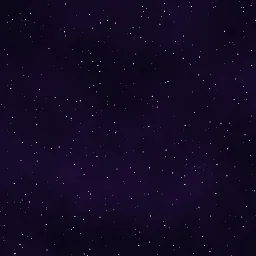
What this component contains
ATTRIBUTION.mdLICENSEREADME.mdcomponent.jsondemo.tscninspect_shader.pymaterial.trespreview.pngstarfield_parallax_2d.gdshadertest_package.pyverification/native.json
How it works
- Shader type
- canvas_item
- Parameters
- space_color (vec4 = 0.01, 0.01, 0.04, 1), nebula_tint (vec4 = 0.12, 0.05, 0.2, 1), density (float = 0.45), scroll_speed (float = 0.05), scroll_angle_degrees (float = 200), twinkle_speed (float = 3), star_scale (float = 60), brightness (float = 1.3)
- Use it on
- A ColorRect (or any CanvasItem) sized to the area to fill; UVs span 0 to 1 across it.
- Result
- A dark purple space with many small blue and warm stars at three sizes.
- Renderers
- compatibility: compiled and rendered, forward plus: not verified, mobile: not verified
- Placement
- res://baltor/godot_shaders/starfield_parallax_2d/
Recorded checks
godot 4.7.2.stable.official.ed1daf0bf
contract_staticengine_runengine_log_cleanshader_in_scenecapture_writtenrender_not_uniformshader_changes_pixels
Limits to consider
Stars are placed per grid cell, so their density is regular at large scales. Very fast scrolling streaks nothing; it only translates the layers.