 Agent
Agent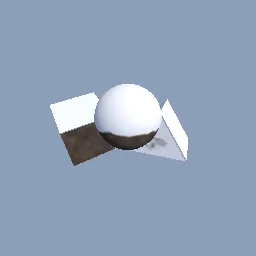
What this component contains
ATTRIBUTION.mdLICENSEREADME.mdcomponent.jsondemo.tscninspect_shader.pymaterial.trespreview.pngsnow_cover_normals.gdshadertest_package.pyverification/native.json
How it works
- Shader type
- spatial
- Parameters
- base_color (vec4 = 0.36, 0.3, 0.26, 1), base_roughness (float = 0.85), base_pattern_scale (float = 12), snow_color (vec4 = 0.95, 0.97, 1, 1), snow_amount (float = 0.55), snow_sharpness (float = 0.06), noise_scale (float = 5), noise_strength (float = 0.35) and 2 more
- Result
- Rock-coloured objects with white snow caps on their tops and upward slopes, with small glints.
- Renderers
- compatibility: compiled and rendered, forward plus: not verified, mobile: not verified
- Placement
- res://baltor/godot_shaders/snow_cover_normals/
Recorded checks
godot 4.7.2.stable.official.ed1daf0bf
contract_staticengine_runengine_log_cleanshader_in_scenecapture_writtenrender_not_uniformshader_changes_pixels
Limits to consider
Coverage ignores occlusion: surfaces under overhangs still get snow if they face up. The vertex lift needs smooth normals and enough vertices; on hard-edged meshes it opens seams. Sparkle direction is fixed, not tied to the scene light.